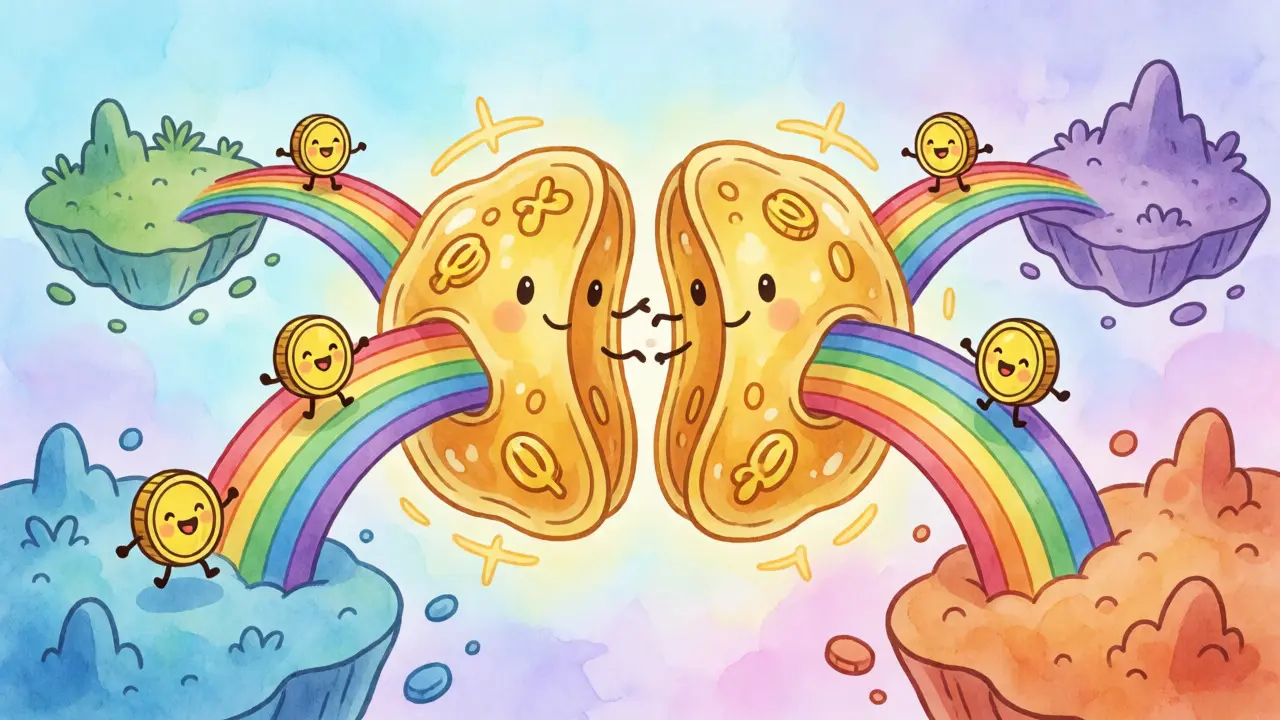
You have probably heard the term "mitosis" from biology class. It’s how cells divide to create new life. In the crypto world, Mitosis uses this exact concept for money. Instead of splitting cells, it splits and recombines liquidity across different blockchains. If you are tired of your assets getting stuck on one chain while better opportunities exist elsewhere, this project aims to fix that fragmentation.
Mitosis is a modular Layer 1 blockchain designed specifically for programmable, cross-chain liquidity. Its native asset, the MITO token, serves as the backbone for governance, staking, and network security. Unlike general-purpose chains like Ethereum or Solana that try to do everything, Mitosis focuses on one job: making sure your capital moves freely and earns yield wherever it needs to go. As of September 2026, it remains a niche but innovative player in the decentralized finance (DeFi) space, targeting users who want unified control over their multi-chain portfolios.
The Core Problem: Fragmented Liquidity
Here is the reality of modern DeFi. You might hold ETH on Ethereum, SOL on Solana, and BTC on Bitcoin. Each chain has its own rules, bridges, and risks. Moving funds between them is slow, expensive, and often requires trusting centralized exchanges. This fragmentation means your capital sits idle on Chain A while high-yield opportunities burn hot on Chain B.
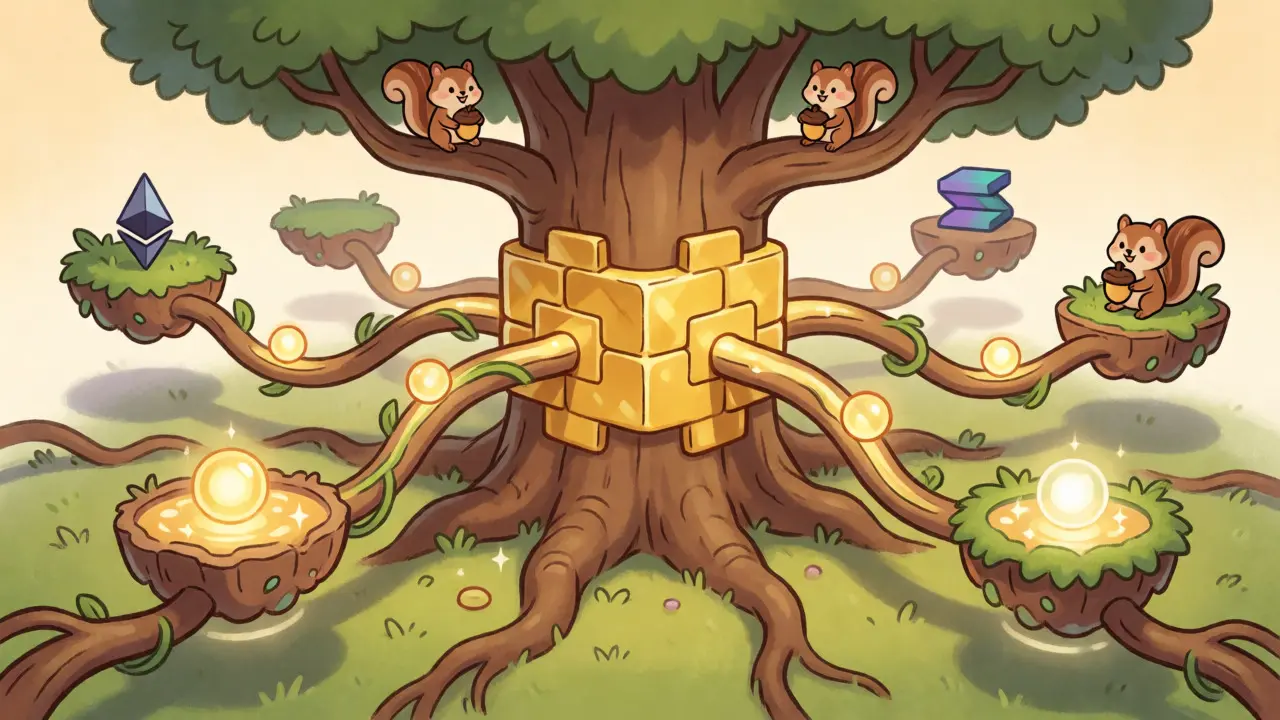
Mitosis solves this by creating a "Hub-and-Spoke" model. Think of the main Mitosis network as the Hub. Other blockchains, like Ethereum or Arbitrum, are the Spokes. When you deposit assets into these branch chains, Mitosis converts them into Hub Assets. These are canonical representations of your real value, living safely on the Mitosis Layer 1. From there, you can deploy those assets anywhere without constantly bridging back and forth. It turns scattered piles of cash into a single, manageable pool.
How MITO Works: The Three-Token System
Most projects just have one token. Mitosis uses three distinct tokens to separate utility, governance, and commitment. This design prevents whales from dominating votes simply because they bought early, and instead rewards active participants.
- MITO: The primary utility token. You use it for staking, paying fees, and receiving rewards. It is the fuel that keeps the engine running.
- gMITO: Governance MITO. When you stake your MITO, you receive gMITO. This gives you voting rights on protocol upgrades, vault approvals, and liquidity allocations. Crucially, if you unstake, you lose the vote. Power follows activity, not just ownership.
- tMITO: Time-locked MITO. If you lock your tokens for longer periods, you get tMITO. This grants higher yields and boosted incentives, aligning long-term holders with the network’s stability.
This structure ensures that the people steering the ship are the ones actively keeping it afloat. It discourages speculative dumping because selling your MITO also removes your governance power and potential yield boosts.
Technical Architecture: ERC-4626 and Vault Frameworks
Under the hood, Mitosis relies on standardization to ensure compatibility. It uses ERC-4626, a widely accepted standard for tokenized vaults. Why does this matter? Because it makes Mitosis positions fungible and easy for other DeFi protocols to integrate. If a protocol supports ERC-4626, it can likely interact with Mitosis vaults out of the box.
The protocol categorizes these positions into two families:
- miAssets: Created via Ecosystem-Owned Liquidity (EOL). These represent deposits managed directly by the community through governance decisions.
- maAssets: Produced through the Matrix yield platform. These focus on optimized yield strategies, automatically routing funds to where returns are highest.
By abstracting the complexity of yield farming into standardized tokens, Mitosis allows users to earn interest without needing to manually hop between farms every week. The system handles the rebalancing; you just hold the position token.
Tokenomics and Supply Details
Understanding supply helps you gauge scarcity and inflation risk. Mitosis has a fixed total supply of 1,000,000,000 MITO. There will never be more than one billion tokens. However, not all of them are circulating right now.
| Metric | Value / Status |
|---|---|
| Total Supply | 1,000,000,000 MITO |
| Circulating Supply | ~181-196 Million MITO (varies by source) |
| Initial Listing Price | ~$0.027 USD (IDO round) |
| Current Price Range | ~$0.0165 - $0.0167 USD |
| Market Cap Rank | ~#1440 - #1450 |
At launch in August 2025, only about 18% of the supply was unlocked. This conservative float protects against immediate sell-offs by early investors. Over time, more tokens enter circulation through emissions and vesting schedules. Keep an eye on the circulating supply figures, as discrepancies between data providers (some say 181M, others 196M) suggest ongoing emissions or varying definitions of "liquid" tokens.
Price History and Volatility Risks
If you are looking at MITO for quick gains, tread carefully. The price history tells a story of high volatility typical for small-cap DeFi assets. Shortly after listing in late 2025, MITO traded around $0.155. By November 2025, it had dropped to roughly $0.099. Fast forward to September 2026, and it trades near $0.0165.
That represents a drawdown of nearly 90% from its post-launch highs. Does this mean the project failed? Not necessarily. Early DeFi tokens often experience severe corrections as hype fades and utility takes over. However, it highlights the risk. MITO is currently a mid-thousand ranked asset. It lacks the massive liquidity of top-tier coins, meaning large buys or sells can swing the price significantly. Always size your positions accordingly.

How to Get Started with Mitosis
Ready to dive in? Your path depends on whether you want to trade or provide liquidity.
For Traders:
You can buy MITO on centralized exchanges that listed it in August 2025. Look for pairs against USDT or USDC. Since the market cap is relatively low, check order book depth before placing large orders to avoid slippage.
For DeFi Participants:
The real value proposition lies in using the protocol. Here is the typical workflow:
- Deposit: Send assets (like ETH or USDC) to a connected branch chain via the Mitosis interface.
- Convert: Receive Hub Assets and subsequently miAssets or maAssets.
- Stake: Stake your MITO to earn gMITO. This secures the network and gives you voting power.
- Govern: Use gMITO to vote on which yield strategies the Matrix platform should prioritize.
- Lock (Optional): Lock some MITO into tMITO for higher yields if you plan to hold long-term.
Note that user staking is explicitly non-slashable. While validators face penalties for downtime or misbehavior, regular stakers do not lose their principal due to validator errors. This reduces the operational risk for everyday users.
Is Mitosis Right for You?
Mitosis appeals to a specific type of investor. If you believe that cross-chain interoperability is the future and that fragmented liquidity is a major bottleneck, this project addresses that pain point directly. The technical foundation-using ERC-4626 and a dedicated Layer 1-is robust.
However, it is not for everyone. The ecosystem is still young. Independent academic research on its security models is limited compared to giants like Ethereum. Community sentiment is mixed; some praise the innovative governance model, while others worry about the steep price decline since launch. If you prefer stable, blue-chip assets, MITO might feel too experimental. But if you want to participate in shaping a specialized liquidity layer, the three-token incentive structure offers a compelling way to engage.
What is the main difference between MITO and other Layer 1 tokens?
Unlike general-purpose Layer 1 tokens (like ETH or SOL) that support any kind of application, MITO is specialized for cross-chain liquidity management. Its architecture is built around converting assets into standardized vault tokens (ERC-4626) to unify yield generation across multiple chains, rather than just providing a generic smart contract environment.
Can I lose my MITO tokens if I stake them?
No, ordinary user stakes are explicitly non-slashable. Only validators who run nodes and produce blocks face slashing risks for misbehavior or downtime. Regular stakers earn rewards without risking their principal due to network consensus failures.
Why are there three different tokens (MITO, gMITO, tMITO)?
The three-token system separates functions to prevent speculation from overriding utility. MITO is for utility and staking. gMITO grants governance rights only to active stakers, ensuring voters are committed. tMITO rewards long-term commitment with higher yields. This aligns incentives so that those who govern the protocol are also those providing liquidity and security.
What is the total supply of MITO?
The total supply of MITO is fixed at 1,000,000,000 tokens. No new tokens will ever be minted beyond this cap. Circulating supply varies as vesting schedules unlock more tokens over time, currently estimated between 181 million and 196 million as of late 2025/early 2026.
Where can I buy MITO?
MITO is listed on several centralized exchanges that onboarded it around August 2025. You can typically find trading pairs against stablecoins like USDT or USDC. Check major aggregators like CoinGecko or CoinMarketCap for the most up-to-date list of supported venues and current volume levels.