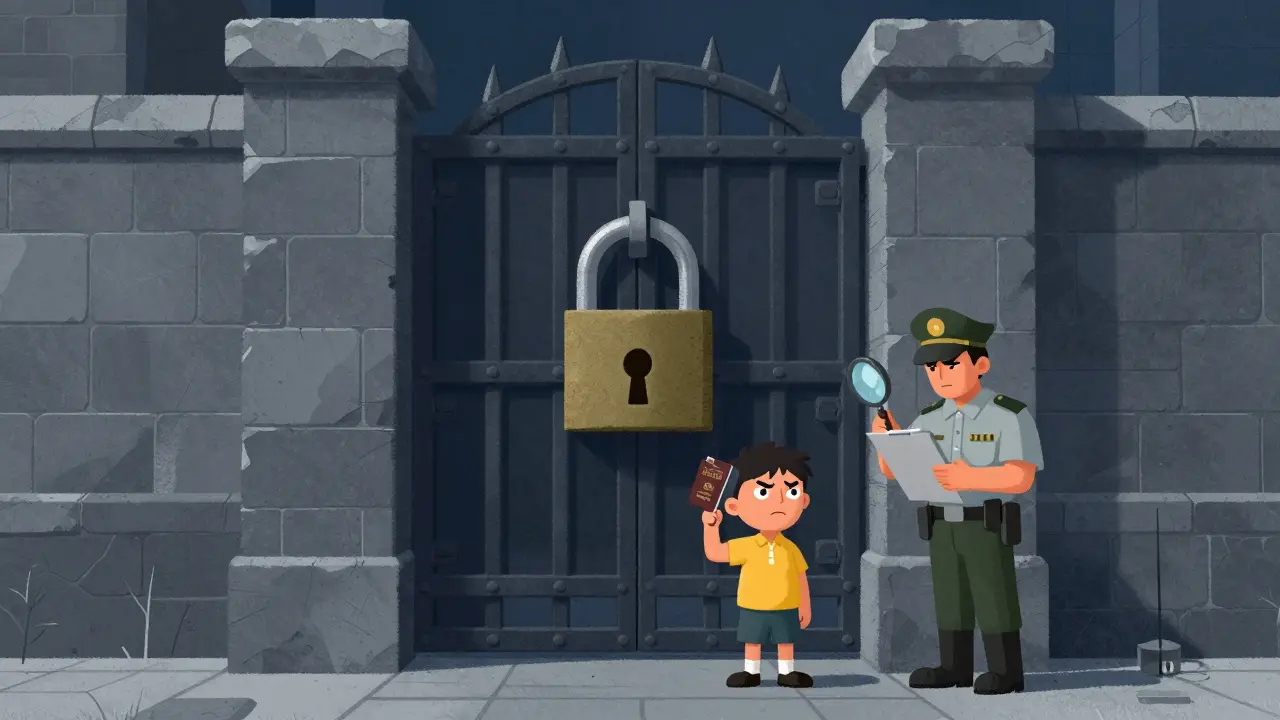
You've just found a promising new token or a trading pair with massive potential, but when you hit the trade button, a cold message pops up: "This service is not available in your region." It's a frustrating wall that thousands of traders hit every day. Whether you are using a massive platform like Binance or a niche swap, where you live often determines what you can actually do with your money. The battle between CEX vs DEX is usually about fees or speed, but the real divide is often about who is allowed to enter the room.
If you're tired of being blocked by your IP address or tired of uploading your passport just to buy a few coins, you need to understand how these two systems handle borders. While one acts like a traditional bank with a strict guest list, the other acts more like a public park-though even that is starting to change as governments catch up to the tech.
The High Wall: How Centralized Exchanges Block You
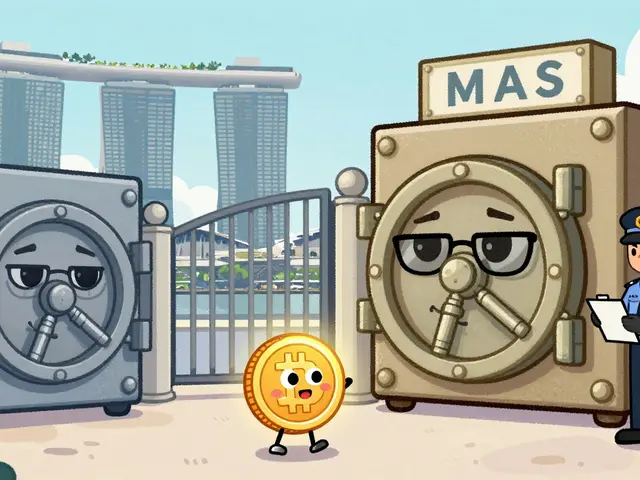
A Centralized Exchange (CEX) is essentially a company. Because they are legal entities with offices and bank accounts, they have to play by the rules of whatever country they operate in. This means they are subject to KYC (Know Your Customer) laws. If a government decides that derivatives trading is too risky for its citizens, the CEX doesn't just hide the feature; they block it entirely for anyone with an ID from that country.
CEXs use a combination of tools to keep the "wrong" people out. They check your IP address, but that's easy to bypass. The real lock is the identity verification process. Once you upload your government-issued ID, the platform knows exactly where you are from and applies the restrictions for that specific jurisdiction. If you're in a country where the local regulator hasn't granted the exchange a license, you're simply out of luck.
This creates a fragmented experience. You might be able to trade spot Bitcoin in your country, but the moment you try to touch futures or leverage, you hit a geographic wall. This is because CEXs rely on a traditional order book model, giving them total control over the matching engine and, by extension, total control over who gets to place an order.
The Open Gate: The DEX Approach to Borderless Trading
Now, imagine a Decentralized Exchange (DEX). There is no CEO, no headquarters, and no one to send a cease-and-desist letter to. A DEX operates via Smart Contracts-self-executing code living on a blockchain. Because there is no central authority matching buyers and sellers, there is no "gatekeeper" to ask for your passport.
Most DEXs use an Automated Market Maker (AMM) protocol. Instead of waiting for another human to sell a coin, you trade against a liquidity pool. This technical structure makes it incredibly hard to enforce geographic restrictions. If you have a crypto wallet and some tokens, the protocol doesn't care if you're in London, Tokyo, or a remote village in the Andes. You connect your wallet, swap your tokens, and you're done.
However, don't assume it's a total free-for-all. Some DEX interfaces (the websites you use to interact with the contract) do use basic IP blocking to avoid legal headaches. But since the actual trading happens on the blockchain, a tech-savvy user can often find a way around a simple website block, whereas you can't "trick" a CEX into accepting a fake passport.
| Feature | Centralized Exchange (CEX) | Decentralized Exchange (DEX) |
|---|---|---|
| Identity Check | Mandatory KYC (ID/Passport) | None (Wallet Address only) |
| Access Control | Strict by Jurisdiction/License | Generally Borderless |
| Blocking Method | KYC Data + IP Address | Mostly IP-based (Frontend only) |
| Fiat On-ramps | Direct (Bank/Card) - Heavily Restricted | None (Requires existing crypto) |
| Regulatory Risk | High (Platform can be shut down) | Low (Code is immutable) |
The Fiat Trap: Where the Real Restrictions Lie
If you're wondering why everyone doesn't just move to a DEX, here is the catch: getting your money into the system. CEXs provide a bridge between the traditional banking world and crypto. They offer "fiat on-ramps," meaning you can deposit USD, EUR, or GBP. These bridges are where the strictest geographic restrictions live. A bank in the US will not send money to an exchange that doesn't comply with FinCEN guidelines.
DEXs typically don't touch fiat currency. They only deal in crypto-to-crypto trades. This means that while a DEX is more accessible once you have coins, it doesn't help you get those coins in the first place. Users in restricted regions often have to find "peer-to-peer" (P2P) ways to acquire their first bit of crypto before they can enjoy the borderless freedom of a DEX.
The Shifting Tide: Are DEXs Becoming Restricted?
The "wild west" days of DEXs are starting to fade. Regulators are realizing that while they can't shut down a smart contract, they can pressure the people who build the interfaces. We are seeing a trend where Layer 2 solutions and front-end developers are being encouraged-or forced-to implement geographic filters.
For example, if a DEX wants to be listed on a popular wallet or a browser, those intermediaries might demand that the DEX block certain countries to avoid legal liability. While the core protocol remains open, the "doors" used to enter that protocol are becoming more regulated. This is a middle-ground approach where the tech stays decentralized, but the user experience starts to look a lot like a CEX.
Security vs. Control: The Trade-off
When you choose a CEX to avoid the complexity of a DEX, you're trading autonomy for convenience. CEXs handle security through cold storage and internal surveillance. If you lose your password, they can reset it. But that same control is what allows them to freeze your account if your government demands it. Your funds are essentially "on loan" to the exchange.
With a DEX, you have total control. You hold your own private keys via a Hardware Wallet. No one can block your account or freeze your funds based on where you live. The downside? If you lose your seed phrase or send money to the wrong address, there is no customer support team to call. You are your own bank, which means you are also your own compliance officer.
Can I use a VPN to bypass CEX geographic restrictions?
A VPN can hide your IP address, which might let you see the website, but it won't bypass KYC. If the exchange requires a passport or utility bill to trade, a VPN is useless because your legal identity is still tied to a restricted region.
Why do DEXs not require KYC?
DEXs run on automated smart contracts. There is no central company acting as a broker to verify your identity. The protocol only cares that you have the required tokens in your wallet to complete the swap, not who you are or where you live.
Are DEXs safer from government freezes?
Generally, yes. Because you hold your own keys, no central entity can "freeze" your wallet. However, if you use a centralized bridge or a regulated front-end, those specific points of access can still be blocked.
Which is better for people in highly regulated countries?
DEXs are typically the only viable option for people in regions where CEXs are banned. While getting the initial crypto (the on-ramp) is the hardest part, once you have assets, a DEX provides the most consistent and unrestricted trading experience.
What happens if a DEX implements geographic blocks?
Usually, only the website (the UI) is blocked. Users can often still interact with the smart contract directly through a blockchain explorer or a different, non-restricted interface, as the code on the blockchain itself cannot be "geofenced."
Next Steps for Traders
If you're currently blocked by a CEX, your best bet is to explore the decentralized route. Start by getting a secure non-custodial wallet. Once you've acquired crypto through a P2P service or a friendly contact, you can connect to a DEX and trade without worrying about your zip code. Just remember: since you're bypassing the "safety net" of a centralized company, double-check every contract address to avoid scams.
For those who prefer the stability of a CEX, check for "global" versions of platforms that might have different licensing for different regions. Some exchanges launch separate entities (like a US-specific version) to comply with local laws while still offering a subset of features.

Jimmy vasquez
April 30, 2026 AT 09:10Solid breakdown of the current landscape. For anyone struggling with the on-ramp issue, I'd suggest looking into local P2P marketplaces or even some of the newer non-custodial ramps that integrate better with wallets.
Noel Mandotah
May 1, 2026 AT 03:30Oh wow, a guide on how to use a DEX. Groundbreaking stuff. 🙄
Gabrielle Danis
May 2, 2026 AT 16:33It is important to emphasize that while DEXs bypass KYC, users should still be mindful of the tax implications in their respective jurisdictions. Most governments track assets via the on-ramps and off-ramps, regardless of where the trading actually occurs. Furthermore, the risk of interacting with a malicious smart contract is significantly higher on a DEX due to the lack of a vetting process for listed tokens.
Arti Jain
May 3, 2026 AT 14:08Indian regulations are superior. We prioritize security over your "freedom." Deal with it.
Sri Astuti
May 5, 2026 AT 01:18Honestly, the way people just blindly trust "immutable code" is absolutely hilarious to me because they don't realize that the developers often leave backdoors or mint functions that can rug you in seconds, and the fact that some of you actually think a VPN is a security strategy for a CEX just shows how little you actually understand about database logging and metadata fingerprints 🙄🤡
Barbara Jones
May 5, 2026 AT 21:45Tnx for sharing this! I always get lapped up in the jargon but this makes it way easer to understand why my account got flagged last year lol
Ryan Nakielny
May 7, 2026 AT 21:13Sure, just "be your own bank." I'm sure everyone loves the feeling of losing their entire life savings because they wrote a seed phrase on a piece of paper that got eaten by a puppy. Truly the pinnacle of financial evolution. 👏
Nitin Gupta
May 8, 2026 AT 20:42I agree with the points made about the fiat trap. It is indeed the most significant hurdle for new users, especially in emerging markets where banking systems are less flexible.
Janis Naglis
May 9, 2026 AT 02:05I love the optimism here!!! 🌟 Using a hardware wallet with a DEX is the absolute gold standard for self-sovereignty!!! 🚀 Just keep hammering those slippage settings and you'll be fine!!! ✨✨
Elle Kharitou
May 10, 2026 AT 17:48This conversation really touches on the deeper philosophical struggle between institutional order and individual liberty, which is such a beautiful dance to witness in the digital age 🌿. When we move away from the gated gardens of centralized finance, we aren't just changing apps, we are fundamentally altering how humanity perceives value and trust across borders 🌏✨. It's like we're building a new global village where the only passport required is a cryptographic key, and though the journey is fraught with peril, the destination of true financial autonomy is worth every single mistake we make along the way 🌸🙏.
Kathleen Warren
May 10, 2026 AT 22:03It can be really scary for beginners to handle their own keys. If anyone is feeling overwhelmed, just take it slow. Start with small amounts that you're okay with losing while you learn how the wallet works.
Wayne Gillis
May 12, 2026 AT 02:00Yo who else is using a VPN right now? 🤣 I bet the CEXs are sweating! 💦 Just don't get caught lol!
Rain Richardsson
May 13, 2026 AT 19:56I'm curious about the P2P options mentioned. Which ones are safest?
AP Fisher
May 14, 2026 AT 06:19So basically, CEX is like a bank and DEX is like a swap meet. I think I get it now.
Veronica Bago
May 14, 2026 AT 18:42Just vibing with this info. Super helpful for anyone just starting out!