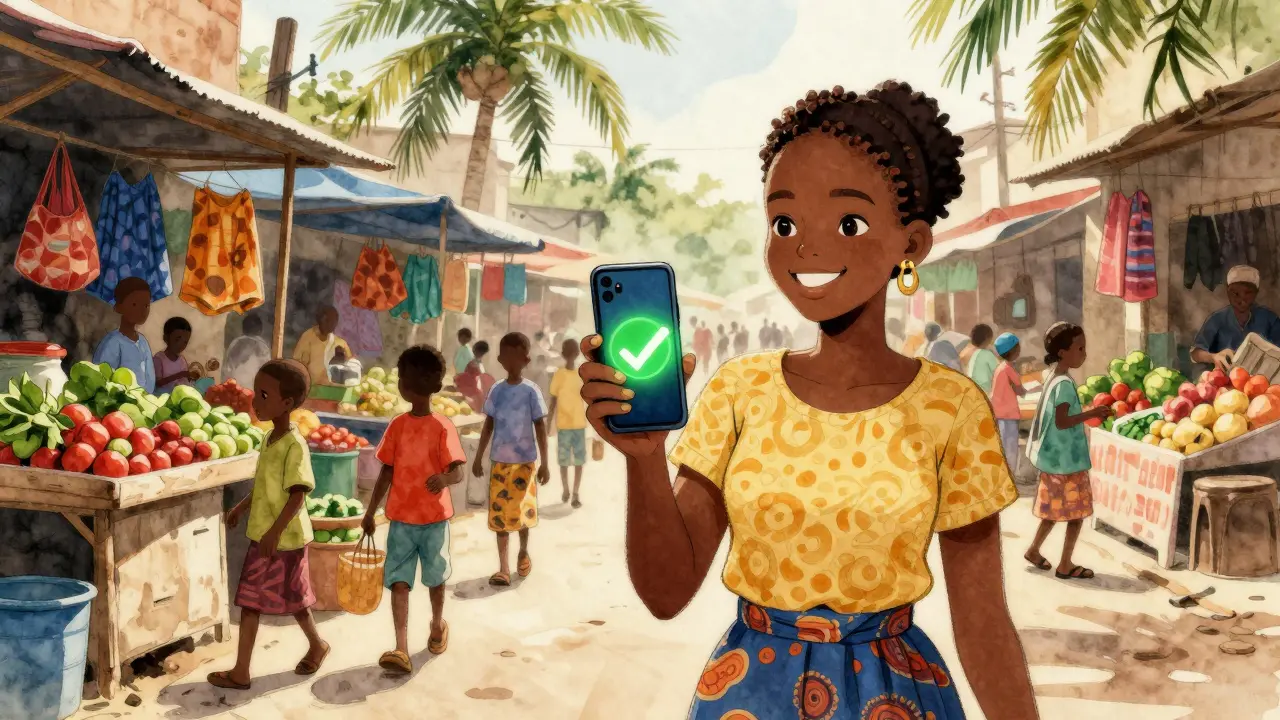
Imagine trying to save your life savings in an account that loses value every single day. For millions of Nigerians, this isn't a hypothetical nightmare-it’s daily reality. With the naira losing more than three-quarters of its value against the US dollar since 2016, and inflation surging past 24% in 2023, traditional banking stopped being a safe harbor for many. Instead, it became a leaky boat.
This economic pressure cooker didn’t kill financial participation; it mutated it. While regulators tried to slam the door on digital assets, Nigerians found a way through the windows, the walls, and eventually, they kicked down the front door. Today, Nigeria stands as the second-largest cryptocurrency market globally, trailing only India. Between July 2023 and June 2024 alone, the country recorded over $59 billion in crypto transactions. This article breaks down how strict restrictions ironically fueled one of the most vibrant crypto ecosystems on Earth, and what this means for the future of money in Africa.
The Paradox of Prohibition: Why Bans Boosted Adoption
It sounds counterintuitive. You’d think banning something would make it disappear. But in Nigeria, the Central Bank of Nigeria (CBN the nation's central banking authority responsible for monetary policy) directives actually acted as a catalyst. In 2021, the CBN issued a circular prohibiting banks from servicing cryptocurrency businesses. The intent was clear: stop the bleeding of foreign reserves and curb speculative trading.
Instead, the ban forced innovation. When banks refused to process crypto-related transfers, users didn’t leave the market. They moved to Peer-to-Peer (P2P) a decentralized trading method where individuals buy and sell assets directly without intermediaries platforms. These platforms allowed users to trade crypto for naira using local bank accounts, mobile money, or even cash deposits, bypassing the direct link between crypto exchanges and traditional banking rails that the CBN wanted to sever.
This period created a unique underground economy. It wasn’t just about speculation; it was about survival. Freelancers earning dollars abroad needed a way to bring those earnings home without losing 8-10% to traditional remittance fees like Western Union or MoneyGram. Small business owners needed a hedge against the rapidly depreciating naira. The restriction created a vacuum, and crypto filled it with speed and efficiency that traditional finance couldn’t match.
Economic Necessity: Inflation and the Unbanked Majority
To understand why crypto caught on so fast, you have to look at the baseline. Nigeria is Africa’s largest economy, valued at roughly $363 billion, but it faces chronic macroeconomic instability. More importantly, access to traditional finance remains limited. Approximately 36% of Nigerian adults are unbanked. For these millions, opening a traditional bank account involves paperwork, minimum balance requirements, and physical branches that may be hours away.
Crypto lowered the barrier to entry. All you need is a smartphone and internet connectivity. By 2025, an estimated 22 million Nigerians-representing 10.3% of the population-held cryptocurrencies. Compare this to just 0.4% a decade earlier, and the growth curve looks less like a line and more like a rocket launch.
The drivers are specific and tangible:
- Inflation Hedging: When the naira crashes, holding Bitcoin or stablecoins like Tether (USDT) preserves purchasing power. Users report converting naira to USDT immediately upon receiving salary to avoid end-of-month devaluation.
- Remittances: Nigerians living abroad send billions home annually. Crypto cuts transaction times from days to minutes and fees from 8% to under 1%.
- Financial Inclusion: Young entrepreneurs in Lagos or Abuja can access global capital markets via decentralized finance (DeFi) protocols without needing a credit score or collateralized loan from a traditional bank.
The Regulatory Thaw: From Ban to Blockchain Integration
The narrative shifted dramatically in late 2023. Recognizing that the ban was ineffective and driving activity into the shadows, the CBN lifted restrictions on banks servicing crypto businesses. This wasn’t just a policy tweak; it was a paradigm shift. Licensed crypto exchanges could now operate openly, and institutional confidence began to return.
By 2025, this regulatory clarity paved the way for major infrastructure upgrades. A landmark moment occurred when the Nigeria Inter-Bank Settlement System (NIBSS) the primary payment switch for interbank transactions in Nigeria partnered with Zone’s blockchain network. This integration modernized the country’s financial backbone, enabling faster, transparent interbank settlements while reducing fraud risks. It signaled that blockchain technology was no longer seen as a threat to the banking system, but as a tool to strengthen it.
Simultaneously, the fintech sector exploded. Moniepoint a leading Nigerian digital payment platform reached unicorn status with a $1 billion valuation after securing investments from giants like Google. While Moniepoint focuses on payments, its success highlights Nigeria’s leadership in financial innovation, with crypto and blockchain playing central roles in expanding access across the population.

Nigeria vs. The World: A Comparative Landscape
How does Nigeria stack up against other global crypto hubs? The data shows distinct differences in usage patterns compared to developed markets.
| Metric | Nigeria / Sub-Saharan Africa | Global Average |
|---|---|---|
| Primary Driver | Inflation hedging & Remittances | Investment & Speculation |
| Retail Transaction Size (<$10k) | Over 8% of volume | 6% of volume |
| Adoption Rank (2024) | #2 Globally (Chainalysis Index) | N/A |
| Regulatory Status (2025) | Open & Integrating | Mixed (Varies by region) |
| Unbanked Population Influence | High (36% unbanked) | Low |
Note the transaction size difference. In North America and Europe, crypto is often dominated by large institutional trades. In Nigeria, the market is deeply retail-focused. Over 8% of all value transferred in Sub-Saharan Africa consists of small transactions under $10,000. This reflects everyday use: buying groceries, paying for services, or sending small amounts to family members. It’s not just whale activity; it’s community activity.
Real-World Usage: How Nigerians Actually Use Crypto
Let’s move beyond the statistics and look at the ground level. What does a typical user experience look like?
The Freelancer: Consider Ada, a graphic designer in Port Harcourt working for clients in London. Previously, she’d receive payments via PayPal, which has high withdrawal fees and complex verification hurdles. Now, she invoices in USDC (a stablecoin pegged to the dollar). She receives the funds instantly in her wallet, converts them to naira via a P2P platform like Binance one of the world's largest cryptocurrency exchanges or local apps like Quidax, and deposits the naira directly into her bank account. She saves time and keeps more of her earnings.
The Trader: Many users start with simple spot trading. The learning curve for basic usage averages 2-4 weeks for tech-savvy Nigerians. Communities on Telegram and WhatsApp play a crucial role here. Experienced users guide newcomers through private key security, exchange interfaces, and fee structures. This peer-to-peer education model is vital because formal financial literacy programs rarely cover digital assets.
The Skeptic Turned Believer: Community sentiment analysis shows a growing trust in regulated exchanges following the CBN’s policy reversal. Users who once feared seizure of assets are now willing to hold larger balances on licensed platforms. However, caution remains. Occasional exchange downtime during high-volatility periods still causes anxiety, reminding users that while crypto solves currency risk, it introduces technical risk.

Challenges That Remain
Despite the progress, the path isn’t smooth. Several hurdles persist:
- Security Risks: As adoption grows, so do scams. Phishing attacks and fake investment schemes target new users. Education on self-custody and recognizing fraudulent platforms is critical.
- Infrastructure Gaps: Internet connectivity issues in rural areas limit access. Power outages can disrupt trading during volatile moments.
- Regulatory Uncertainty: While the current stance is positive, policies can shift. Investors remain wary of sudden reversals or new taxes that could impact profitability.
- Technical Complexity: Moving from simple trading to DeFi requires advanced knowledge. Most users stick to centralized exchanges, missing out on the full potential of decentralized finance due to complexity barriers.
Future Outlook: Institutionalization and CBDCs
Where does this go from here? The trajectory points toward institutionalization. We’re seeing a blend of grassroots adoption and top-down integration. The partnership between NIBSS and blockchain networks suggests that traditional banks will increasingly rely on distributed ledger technology for backend operations.
There is also talk of a Central Bank Digital Currency (CBDC). If the CBN launches a digital naira, it could coexist with private cryptocurrencies. Rather than competing, they might serve different purposes: the e-naira for official government transactions and compliance-heavy activities, and private cryptos for cross-border trade, inflation hedging, and innovative financial products.
Projections suggest the number of crypto users in Nigeria will continue to climb, potentially reaching deeper penetration rates as younger, digitally native generations enter the workforce. The combination of economic necessity, technological infrastructure, and a gradually friendly regulatory environment creates a fertile ground for sustainable long-term growth.
Is cryptocurrency legal in Nigeria in 2026?
Yes. Since late 2023, the Central Bank of Nigeria has lifted bans on banks servicing crypto businesses. Licensed exchanges operate freely, and the regulatory environment is considered open and supportive of innovation, though users should always ensure they use registered platforms.
Why is Nigeria ranked #2 in global crypto adoption?
Nigeria ranks second globally, behind only India, due to high inflation, currency devaluation, and a large unbanked population. These factors drive citizens to use crypto for preserving wealth, receiving remittances, and accessing financial services unavailable through traditional banks.
What are the best platforms for buying crypto in Nigeria?
Popular platforms include international giants like Binance and Coinbase, as well as local favorites like Quidax, Yellow Card, and Luno. These platforms offer P2P trading options that allow users to buy crypto with naira via bank transfer or mobile money.
How does crypto help with inflation in Nigeria?
Users convert their naira into stablecoins (like USDT or USDC) or hard assets like Bitcoin. This protects their purchasing power from the rapid depreciation of the naira, allowing them to store value more securely than in traditional savings accounts.
Are there risks associated with crypto adoption in Nigeria?
Yes. Risks include volatility (for non-stablecoins), security threats like hacking or scams, regulatory changes, and technical issues such as exchange downtime. Users must practice good security hygiene, such as using strong passwords and two-factor authentication.
Can I use crypto for everyday purchases in Nigeria?
Direct merchant acceptance is still growing, but many users convert crypto to naira instantly via P2P platforms to pay for goods and services. Some fintech cards linked to crypto wallets also allow spending crypto at merchants that accept Visa or Mastercard.
What is the role of P2P trading in Nigeria?
P2P (Peer-to-Peer) trading is the backbone of Nigerian crypto adoption. It allows users to buy and sell crypto directly with each other using local payment methods, bypassing traditional banking restrictions and offering competitive exchange rates.
How has the CBN's policy changed recently?
The CBN reversed its previous ban in late 2023, allowing banks to service crypto businesses. This shift encouraged institutional participation, improved liquidity, and boosted investor confidence, leading to significant growth in regulated trading volumes.

Heather Austin
July 19, 2026 AT 07:59i mean look at the stats, 22 million users in a few years is insane growth especially when you consider how hard it was to even talk about this stuff five years ago
Ran Tao
July 19, 2026 AT 10:52oh please don't get me started on the so-called 'innovation' here 🙄 its just desperation dressed up as progress and lets not pretend for a second that this is some utopian financial freedom movement because it really isn't 😂
Kat Barr
July 20, 2026 AT 01:40im so glad they finally lifted the ban!! its amazing to see how much the community has grown despite everything they went through 💖💖💖
Logan Edmison
July 20, 2026 AT 22:56the irony is palpable isnt it? the government tries to control the flow of capital but ends up creating a shadow economy that dwarfs the official one in terms of daily utility and speed
Michelle Walker
July 21, 2026 AT 12:11you are ignoring the massive security risks. scams are rampant. new users get wrecked. this article is too optimistic.
Shay Thomson
July 22, 2026 AT 22:39I think we need to look at this with an open heart. The people are trying to survive. It is beautiful to see resilience in the face of such economic hardship.
DJ Maleko
July 23, 2026 AT 13:21so basically if you live there you have no choice but to use it? seems like coercion rather than adoption to me 🤔👀
Erika Pozzetto
July 24, 2026 AT 16:32It is imperative to understand that the integration of blockchain technology into the existing financial infrastructure represents a significant paradigm shift that cannot be underestimated in its potential impact on global monetary systems and local economic stability particularly in developing nations where traditional banking services are often inadequate or inaccessible to large segments of the population thereby necessitating alternative solutions that provide greater accessibility and efficiency in transaction processing and value storage mechanisms which are essential for fostering inclusive economic growth and development across diverse socio-economic landscapes
Russ Fincham
July 26, 2026 AT 16:05the data is clear. naira devaluation drove adoption. simple cause and effect.
Linda Hilliard
July 28, 2026 AT 03:39let us be honest about the regulatory arbitrage happening here :/ most of these platforms are operating in gray areas and calling it innovation is a stretch for those who understand the legal nuances involved in cross-border transactions and anti-money laundering protocols
Winston Lacewing
July 28, 2026 AT 11:21this whole situation is tragic really 😢 people losing life savings because the system failed them and now they are turning to volatile assets hoping for salvation while predators wait in the shadows 🕵️♂️💸
Kristine Lawson
July 30, 2026 AT 03:49One must question the morality of allowing unregulated markets to flourish under the guise of necessity; it sets a dangerous precedent for other nations to ignore consumer protection laws in favor of short-term economic metrics.
Tawny Holmes
July 30, 2026 AT 14:13p2p is the only reason this works. banks would never allow direct transfers without killing the spread.
Jessie Smith
August 1, 2026 AT 07:14its kinda funny how the elites thought banning crypto would stop it but they just made it more underground and profitable for everyone else lol
Drew M
August 1, 2026 AT 12:21look at the sheer scale of this! 🚀 $59 billion in a year is no joke. Nigeria is leading the way in Africa and honestly the rest of the world should take notes on how to integrate fintech properly 🌍✨
Deep Rahman
August 2, 2026 AT 07:14when we look at the history of currency we see that money is always evolving from shells to gold to paper to digital and now crypto is just the next step in this long journey of human ingenuity seeking better ways to store and transfer value across time and space without relying solely on centralized authorities that may not always act in the best interest of the common person
Melissa Beckwith
August 2, 2026 AT 15:53I have been studying the market trends for years and I can tell you that the retail focus in Nigeria is unique because it is driven by survival not speculation which makes the user base much more sticky and resilient compared to western markets where people jump in and out based on price action alone
Josephine Finlayson
August 3, 2026 AT 02:56It is wonderful to see the support systems growing within the communities. Peer education is so important for safety!
Tuan Nguyen
August 3, 2026 AT 05:13the infrastructure gaps mentioned are understated. power outages during high volatility are a nightmare. this is not sustainable long term without massive grid upgrades.
Hazel Fruitman
August 5, 2026 AT 01:17i feel bad for the people getting scammed but i guess thats just part of learning to fish for yourself huh
Autumn Story
August 6, 2026 AT 02:30omg i hope everyone stays safe out there!! its scary but also inspiring to see people helping each other learn 💕💕
Mark Tuason
August 6, 2026 AT 18:16The collaboration between NIBSS and blockchain networks is a positive step towards modernizing the financial sector while maintaining necessary oversight.
Ella Collinson
August 8, 2026 AT 15:10DeFi protocols offer yield opportunities that traditional banks cannot match due to fractional reserve banking constraints and inefficiencies in liquidity provision.
Ray Arney
August 8, 2026 AT 17:23yeah i think its cool how they are using it for remittances mostly. saves a ton of fees.
Andrew Schneider
August 9, 2026 AT 14:54everyone says its great but what about the environmental impact?? 🌱💥 and dont get me started on the energy consumption of proof of work chains even if eth merged its still a concern for many purists out there 🤷♂️😒
Eric Braddock
August 10, 2026 AT 09:04the central bank lifting the ban is clearly a sign that they lost control of the narrative and had to capitulate to the decentralized forces they tried to suppress initially which proves that censorship resistance is real and inevitable regardless of governmental pressure
Nick G
August 10, 2026 AT 16:49As someone who has traveled extensively in West Africa, I can attest to the vibrant nature of the informal economy. The integration of cryptocurrency into this ecosystem is a natural evolution that respects the cultural context of trust-based transactions while leveraging modern technology for enhanced security and transparency.
Nick Wengel
August 12, 2026 AT 15:08simple truth: people want to save their money from inflation. crypto does that better than naira right now.
Alicia Hull
August 14, 2026 AT 00:40This article raises important questions about regulatory frameworks. How do we ensure consumer protection without stifling innovation? We need robust policies that address both issues simultaneously.