
You’ve bought tickets to a sold-out concert. You’re excited. Then, at the door, you realize your ticket is fake. Or worse, someone else has a copy of the same QR code. This nightmare scenario happens far too often in traditional ticketing. But what if your ticket couldn’t be copied? What if it was mathematically impossible to forge? That’s the promise of NFT ticket authenticity verification, a system that uses blockchain technology to create unique, tamper-proof digital passes.
Unlike standard PDFs or paper tickets, Non-Fungible Tokens (NFTs) are distinct digital assets stored on a decentralized ledger. They don’t just prove you bought something; they prove you own the *only* valid version of that specific asset. For event organizers and fans alike, this shift from centralized databases to cryptographic proof changes everything about how we handle access control.
Why Traditional Tickets Fail
To understand why NFTs matter, you first need to see where current systems break down. Most modern tickets rely on QR codes or barcodes linked to a central server. When you scan your phone at the gate, the scanner pings a database to check if that code is valid. It’s simple, but it has major flaws.
The biggest issue is duplication. If a hacker intercepts the data stream, or if a venue employee leaks a batch of codes, scammers can generate infinite copies. These "ghost tickets" look real because they match the format. The only way to catch them is after the fact, when two people show up with the same code. By then, the damage is done. Fans miss out, and organizers lose revenue.
Then there’s the secondary market problem. Scalpers buy thousands of tickets using bots, then resell them at inflated prices. Because traditional tickets lack programmable logic, organizers have no control over who holds the ticket once it leaves their hands. They can’t enforce price caps, and they can’t take a cut of the resale profit. The system is opaque, exploitative, and ripe for fraud.
How NFT Verification Works
NFT ticketing flips this model on its head. Instead of relying on a central server to say "this ticket is valid," the blockchain itself serves as the source of truth. Here is how the process works in practice:
- Minting: The event organizer creates a unique token on a blockchain (like Ethereum or Polygon). Each token has a unique ID and metadata linking it to a specific seat or entry level.
- Purchase: You buy the ticket, which transfers ownership of that specific token to your digital wallet. No middleman holds the record; the blockchain does.
- Verification: At the venue, staff use a scanner that checks the blockchain directly. It confirms that the token exists, that it hasn’t been marked as "used," and that it belongs to the person holding the device.
This isn’t just about scanning a code. It’s about verifying ownership through cryptography. The scanner doesn’t ask a server "Is this code valid?" It asks the network "Does this user hold the private key associated with this unique token?" Since private keys cannot be duplicated without compromising the original wallet, the ticket itself becomes unforgeable.
| Feature | Traditional QR Code | NFT Ticket |
|---|---|---|
| Data Storage | Centralized Database | Decentralized Blockchain |
| Duplication Risk | High (Codes can be copied) | None (Unique cryptographic signature) |
| Ownership Proof | Email receipt or account login | Private key possession |
| Resale Control | Minimal (Scalping allowed) | Programmable (Price caps, royalties) |
| Fraud Detection | Post-entry (Too late) | Pre-entry (Real-time validation) |
The Role of Smart Contracts
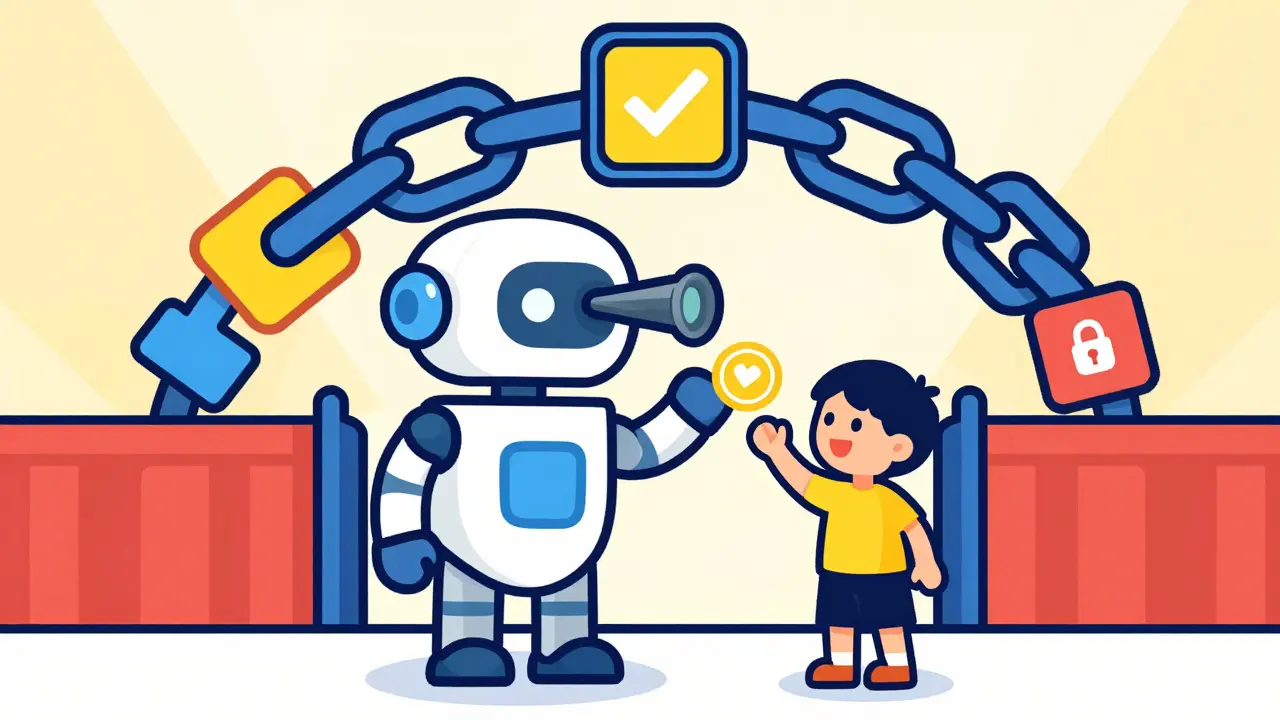
The magic behind NFT tickets isn’t just the storage; it’s the logic. Smart contracts are self-executing programs stored on the blockchain that automatically enforce rules when conditions are met. In ticketing, these contracts do heavy lifting that human staff used to handle manually.
For example, an organizer can write a contract that says: "This ticket can only be resold for under $100." If someone tries to list it for $150, the transaction simply fails. The blockchain rejects it. This kills scalping at the source. Another common feature is royalty splits. The contract can be programmed to send 5% of any resale fee back to the artist or venue automatically. Every time the ticket changes hands, the creator gets paid. No invoicing, no chasing down fees.
Smart contracts also manage validity windows. A ticket might be programmed to expire exactly one hour after the event ends. Unlike a paper ticket that could theoretically be reused next year if the barcode isn’t updated, an NFT ticket’s status is immutable. Once the contract marks it as "redeemed," it is permanently locked. This prevents the "re-entry" fraud where one person passes their phone to another outside the venue.
Challenges in Real-World Adoption
If NFT ticketing is so secure, why isn’t everyone doing it? The answer lies in user experience and technical friction. Blockchain networks aren’t perfect. During high-traffic events, transaction fees (gas fees) on networks like Ethereum can spike dramatically. Imagine trying to buy a concert ticket but paying $50 just in network fees. That’s a dealbreaker for most fans.
This is why many platforms are moving to Layer-2 solutions or alternative blockchains like Polygon or Solana. These networks offer faster speeds and near-zero costs, making micro-transactions viable for ticket sales. However, fragmentation remains an issue. If a fan buys a ticket on one chain, they might not be able to transfer it easily to a wallet on another.
There’s also the "wallet barrier." To hold an NFT ticket, you need a crypto wallet. For the average concert-goer, managing seed phrases and private keys feels risky and complicated. One wrong move, and you lose access to your ticket forever. Event organizers are responding by building "custodial wallets"-apps that hide the blockchain complexity behind a familiar interface. You log in with email, and the app handles the crypto in the background. It’s a necessary compromise to make the tech accessible.
Beyond Entry: The Lifecycle of an NFT Ticket
An NFT ticket doesn’t die when you walk into the venue. Its value extends throughout the entire event lifecycle. Because the ticket is a persistent digital asset, it can unlock perks long after the show is over.
Think about exclusive merchandise. Only holders of the verified NFT ticket get access to a limited-edition hoodie drop. Or consider community access. Owning the ticket grants entry to a private Discord channel where the artist shares behind-the-scenes content. These benefits are enforced by the same smart contract that controlled entry. If you sell the ticket, you lose those perks. If you keep it, you gain them.
This creates a new kind of fan economy. Collectors might hold onto tickets as memorabilia, knowing they contain verifiable proof of attendance. Platforms like SeatlabNFT have already shown that this scan-and-verify technology can bridge physical and digital worlds, allowing venues to offer instant rewards upon entry. The ticket becomes a membership card, a souvenir, and a security pass all in one.

Security Risks and Mitigation
No system is immune to risk. While NFTs prevent counterfeiting, they introduce new vulnerabilities centered around custody. Phishing attacks targeting wallet credentials are common. Hackers know that if they steal your private key, they steal your ticket-and potentially other assets in your wallet.
Event organizers must implement robust identity verification layers. Some platforms require government ID scans before minting a ticket, linking the NFT to a real-world identity. This adds friction but drastically reduces bot purchases. Additionally, multi-signature wallets can be used for high-value tickets, requiring multiple approvals to transfer ownership. This makes it harder for a single compromised device to move the asset.
Another risk is network congestion. If a blockchain goes down during a major event, scanners might fail to verify tickets in real-time. Hybrid systems are emerging here, where offline caches validate recent transactions while syncing with the main chain later. This ensures the doors stay open even if the internet lags.
The Future of Verified Access
We are still in the early stages. But the trajectory is clear. As blockchain infrastructure matures, the cost and complexity will drop. We’ll likely see hybrid models become standard: traditional ticketing interfaces for purchase, with underlying NFT infrastructure for verification and resale control.
For now, if you’re buying an NFT ticket, treat your wallet like your bank account. Never share your seed phrase. Use reputable marketplaces. And remember: the power of this technology isn’t just in stopping fakes-it’s in giving you true ownership of your experience. Your ticket isn’t just a permission slip anymore. It’s a digital asset that proves you were there, securely and forever.
What is NFT ticket authenticity verification?
It is a process that uses blockchain technology to confirm that a digital ticket is genuine and owned by the presenter. Unlike traditional QR codes, NFTs are unique tokens on a decentralized ledger that cannot be duplicated or forged, ensuring only the rightful owner can enter the event.
Can NFT tickets be resold?
Yes, but with controls. Smart contracts allow organizers to set rules for resale, such as maximum price limits or royalty percentages that go back to the artist. This prevents scalping and ensures fair pricing in the secondary market.
Do I need a crypto wallet to buy an NFT ticket?
Technically yes, but many platforms simplify this. You may need to create a wallet to receive the ticket, but some services offer custodial solutions where you log in with email and the platform manages the backend crypto details for you.
What happens if I lose my wallet?
If you lose access to your private key or seed phrase, you lose access to the NFT ticket. Unlike a password reset on a website, blockchain ownership is permanent. This is why keeping backups of your seed phrase is critical for NFT ticket holders.
Are NFT tickets more expensive than regular tickets?
Not necessarily. While blockchain transaction fees (gas fees) can add cost, many platforms use low-cost networks like Polygon to minimize these expenses. The ticket price itself is set by the organizer, similar to traditional tickets.


John Gonzalez Bentham
May 17, 2026 AT 08:56thats just another way for tech bros to scam people with crypto scams the whole idea is flawed and nobody wants this
Tobias Gjerlufsen
May 17, 2026 AT 10:55You clearly don't understand how blockchain works so your opinion is worthless. The technology eliminates intermediaries which means less fees not more. You are part of the problem because you refuse to educate yourself on decentralized systems.
Ruben Michel
May 17, 2026 AT 19:01The notion that one can simply 'lose' a digital asset due to poor personal security is a testament to the user's own incompetence rather than a flaw in the cryptographic architecture. Those who cannot manage their private keys have no place in the modern economy of verified ownership.
Ellie Riddell
May 18, 2026 AT 23:38I guess if you lose your seed phrase you also lose your soul or whatever. Sounds like a lot of stress for a concert ticket.
Sharada Vakkund
May 19, 2026 AT 08:01We should all support new technologies that help us connect better. It is important to be open minded about how we buy tickets in the future. Let us embrace change together as a community.
Shelby Cantu
May 19, 2026 AT 23:11Great points!
Gavin Wonnacott
May 21, 2026 AT 02:29This entire concept is an insult to my intelligence. I demand to know why I should care about your little experiment. You are wasting everyone's time with this nonsense.
Samara McCallum
May 21, 2026 AT 21:36i feel like this is really dramatic but maybe it will work out in the end who knows life is unpredictable
Sudarshan Anbazhagan
May 22, 2026 AT 09:06It is imperative that we consider the philosophical implications of such a system where ownership is defined by code rather than human interaction the current state of affairs is inadequate and must be replaced by a superior structure that enforces order through algorithmic precision without deviation
Destiny Kilby
May 24, 2026 AT 02:14i understand the concern about losing access but i think it is important to trust the process and follow the guidelines carefully to ensure safety
Sheldon Friesen
May 24, 2026 AT 20:21Let’s look at the bright side! This could really revolutionize the industry, wouldn’t you agree? We need to stay positive and keep pushing forward with these innovations!
Tricia Alach
May 25, 2026 AT 09:52i think its cool but im worried bout the gas fees they seem high sometimes and its annoying to pay extra for nothing
Jan Gilmore
May 26, 2026 AT 02:25Everyone here is missing the point. The real issue is the infrastructure. Ethereum is too slow. You need to use Solana or Polygon if you want this to actually work for mass adoption. Stop complaining about the tech and learn how it works.
Jerry CUNNINGHAM SR
May 27, 2026 AT 03:27It is essential that we respect the boundaries of individual choice in this matter. While some may prefer traditional methods, others find value in the new approach. We should foster a dialogue that allows for diverse perspectives without judgment or coercion.
Ankush Pokarana
May 27, 2026 AT 10:29you have to believe in yourself and the technology because if you do not then nothing will ever change and we will remain stuck in the past fighting over paper scraps instead of embracing the digital future that awaits us all with open arms and clear minds