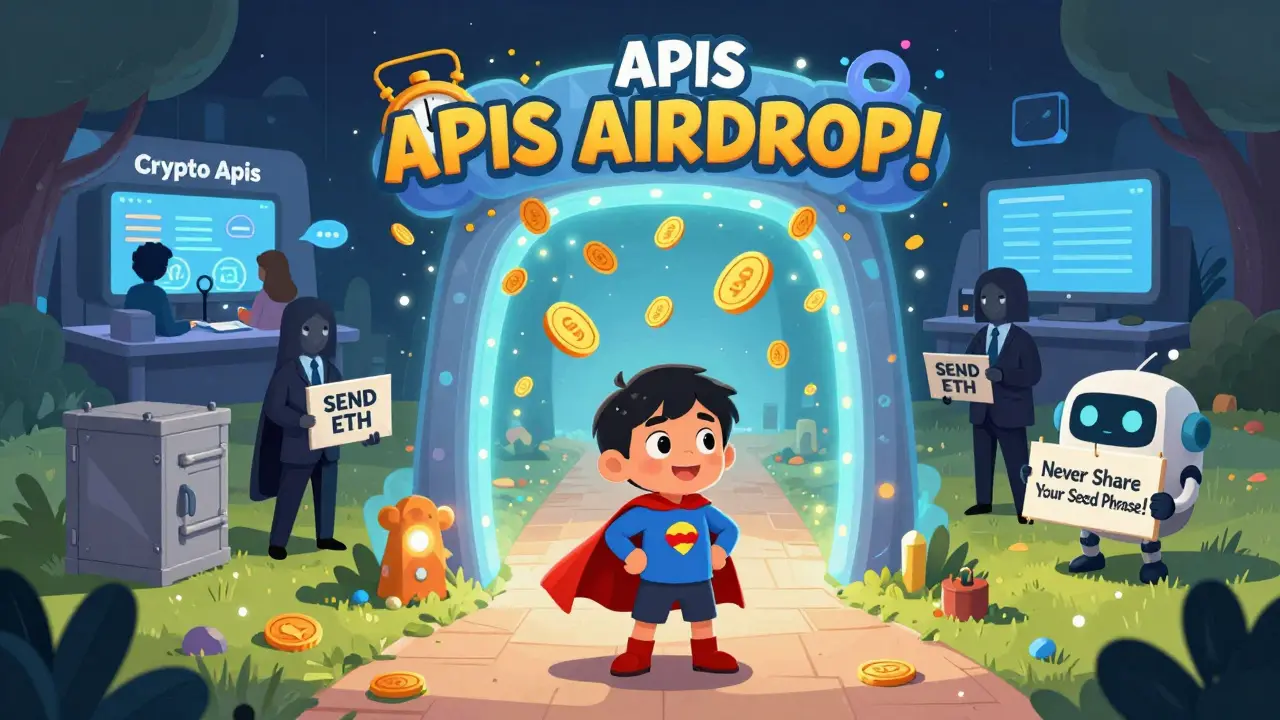
There’s no official project called The APIS with a confirmed airdrop as of February 2026. If you’ve seen ads, Discord posts, or Telegram channels promoting an APIS airdrop, you’re likely encountering a scam or misinformation. Many fake airdrops use names that sound technical or similar to real projects - like "APIS" - to trick users into connecting wallets or sharing private keys. Real blockchain projects don’t ask you to send crypto to claim free tokens. They don’t need your seed phrase. And they don’t rush you with countdown timers.
What is "The APIS" supposed to be?
The name "APIS" sounds like it’s trying to reference "APIs," which stands for Application Programming Interfaces. In tech, APIs let different software systems talk to each other. Companies like Crypto APIs is a real company that provides blockchain infrastructure tools - like data feeds for Bitcoin, Ethereum, and Litecoin - to developers. They had a small airdrop in 2024, giving away 50 API tokens to developers who signed up for their platform. But that’s it. That’s not "The APIS." There is no major blockchain project named "The APIS" launching a public token distribution in 2026.Why do fake airdrops use names like "APIS"?
Scammers pick names that sound legitimate. "API" is a common word in crypto and web3. It makes the scam feel technical, professional, and trustworthy. You might see a website with sleek graphics, a whitepaper full of buzzwords like "decentralized interoperability" or "layer-2 API mesh," and a countdown timer saying "Only 2 hours left to claim your 10,000 APIS tokens!" That’s a red flag. Real airdrops don’t use fear tactics. They don’t pressure you. They announce details on official channels - Twitter (X), GitHub, or their own website - and they give you time to research.
How to spot a fake crypto airdrop
Here’s what real airdrops look like versus fake ones:- Real: You sign up using your wallet address. No deposit required. No private keys asked for.
- Real: The project has a public team with LinkedIn profiles, past work, and verifiable experience.
- Real: The tokenomics are explained clearly: total supply, distribution breakdown, vesting schedules.
- Fake: You’re asked to send ETH, BNB, or USDT to "unlock" your tokens.
- Fake: The website has no GitHub repo, no audit reports, no community forums.
- Fake: The Twitter account was created last week, with no followers or engagement.
If you’ve already connected your wallet to a site claiming to be "The APIS," check your wallet immediately. Look for any recent transactions. If you see a transfer out - even a tiny one - your wallet may be compromised. Stop using it. Move your funds to a new wallet. Never reuse the old one.
What about the Crypto APIs airdrop?
There is a real project called Crypto APIs is a company that builds tools for developers building blockchain apps. In late 2024, they ran a small airdrop for their API token. Only developers who signed up for their platform and built a project using their endpoints received tokens. No one got tokens just for joining a Telegram group. No one got tokens for sharing a post. The total supply was 10 million API tokens. Only 500,000 were distributed in the airdrop. The rest are locked for team, development, and ecosystem growth. If you’re a developer, you can check their official site for any future programs. But again - this has nothing to do with "The APIS."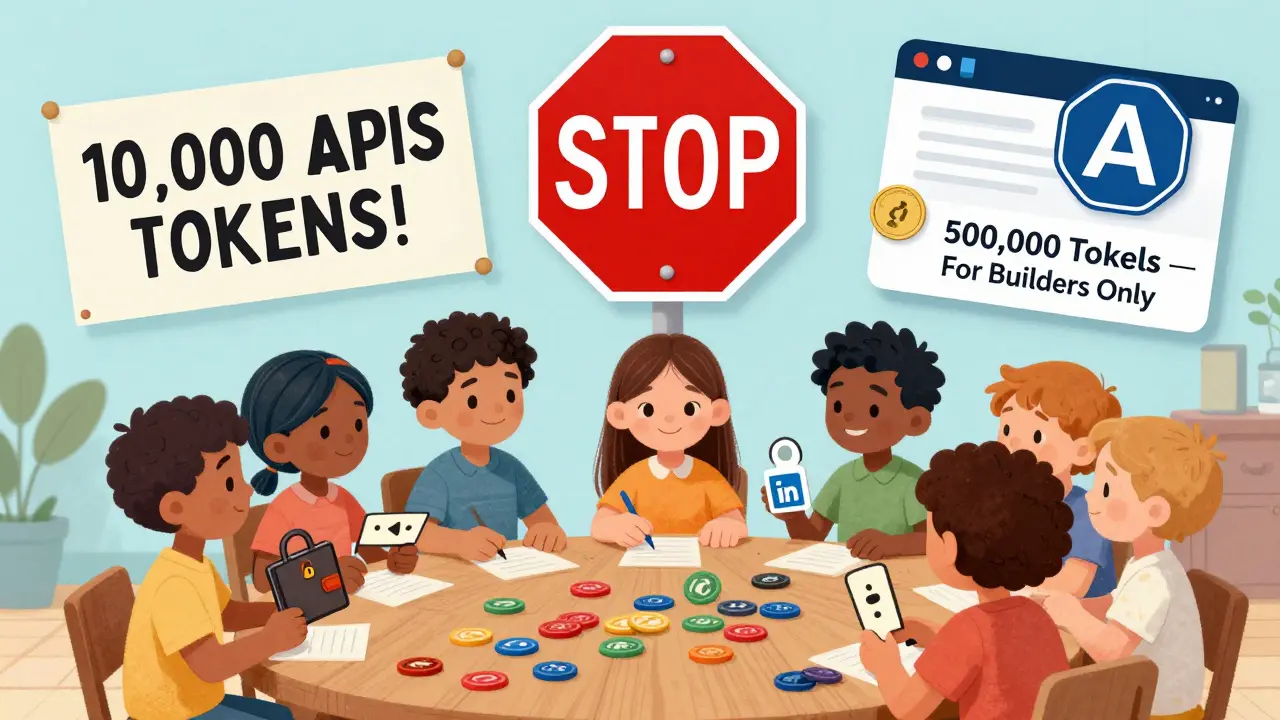
What should you do instead?
If you’re looking for real airdrops in 2026, here’s what works:- Follow reputable crypto news sources like CoinDesk, CoinTelegraph, or The Block.
- Check official project websites - not links from Twitter DMs or Reddit threads.
- Use trusted airdrop trackers like AirdropAlert or AirdropBob - but always verify the project independently.
- Join communities on Discord or X where the team actively posts updates.
- Never give out your seed phrase. Ever.
There are hundreds of legitimate airdrops every year. You don’t need to chase every shiny name. Stick to projects with clear goals, transparent teams, and real utility. If something sounds too good to be true - like free tokens with no effort - it is.
What happens if you fall for a fake APIS airdrop?
If you sent crypto to a fake "The APIS" site, you won’t get it back. Blockchain transactions are irreversible. There’s no customer service, no refund policy, no way to reverse it. Your only option is to secure your remaining funds, change your passwords, and learn from the mistake. Many people lose thousands this way. The scammers aren’t targeting beginners - they’re targeting people who don’t know how to verify legitimacy.Real innovation in crypto doesn’t come from fake airdrops. It comes from teams building tools, fixing problems, and earning trust over time. Don’t confuse hype with progress.