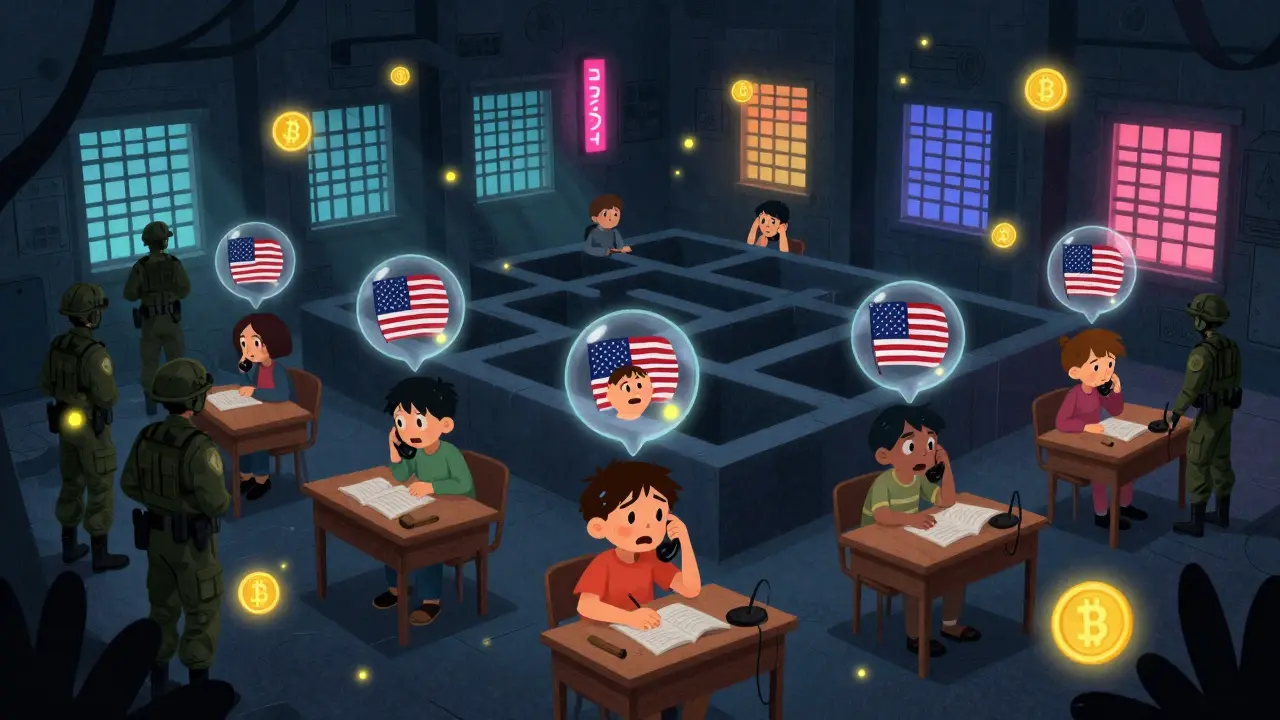
On September 8, 2025, the U.S. Treasury Department dropped a major hammer on cryptocurrency fraud networks based in Myanmar. Nine entities operating out of Shwe Kokko, a lawless zone on the Thai-Burmese border, were officially sanctioned under U.S. law. These aren’t just random scammers. They’re part of a highly organized, violent criminal network protected by the Karen National Army (KNA), a militia group with deep ties to Myanmar’s military junta. The goal? To steal billions from Americans through fake crypto investment schemes - and they’re doing it with forced labor, torture, and human trafficking.
How These Scams Work
Picture this: You see an ad online - "High-paying job in Thailand. No experience needed. Work from home. $3,000/month." It sounds too good to be true? It is. Victims - often from Southeast Asia, but sometimes even from the U.S. - are lured in with promises of remote tech jobs. Once they arrive at one of the compound-style scam centers in Shwe Kokko, their passports are taken. They’re locked in. For 12 to 18 hours a day, they’re forced to call Americans, pretending to be crypto traders, bank agents, or tech support. Their job? Convince people to send money into fake wallets labeled as "high-yield crypto funds" or "AI trading bots." These aren’t small-time operations. Each compound houses hundreds of victims, all under armed guard. The money they steal? It flows through cryptocurrency exchanges, mixers, and decentralized platforms to hide its trail. The KNA takes a cut. The top bosses - including Saw Chit Thu and his sons - get rich. And the victims? Many are beaten if they don’t meet daily quotas. Some have died. The U.S. Treasury estimates that in 2024 alone, Americans lost over $10 billion to these scams. That’s more than the entire GDP of some small countries. And Myanmar’s Shwe Kokko is ground zero.What the Sanctions Actually Do
The sanctions, issued by OFAC (the Office of Foreign Assets Control), don’t just freeze bank accounts. They cut off the entire ecosystem. Here’s what happens when an entity is sanctioned:- All U.S.-based assets tied to the entity are frozen - no exceptions.
- U.S. citizens and companies are banned from doing any business with them - even sending a single dollar.
- Any financial institution handling U.S. transactions must block payments to or from these entities.
- Foreign banks that deal with them risk losing access to the U.S. financial system.
Why Crypto? Why Now?
Crypto is the perfect tool for these criminals. It moves fast. It’s global. It’s hard to trace. Unlike traditional banks, many crypto platforms don’t require ID verification - especially on decentralized exchanges. Scammers use this to turn stolen dollars into Bitcoin, Ethereum, or stablecoins, then wash them through multiple wallets before cashing out. The U.S. didn’t act randomly. This was years in the making. The Treasury Department has been quietly tracking these networks since 2022. They’ve worked with the FBI, Secret Service, and international partners in Thailand, Cambodia, and Malaysia to map out the money flows. The $10 billion loss in 2024 was the tipping point. The U.S. realized: if they don’t act now, the damage will keep growing.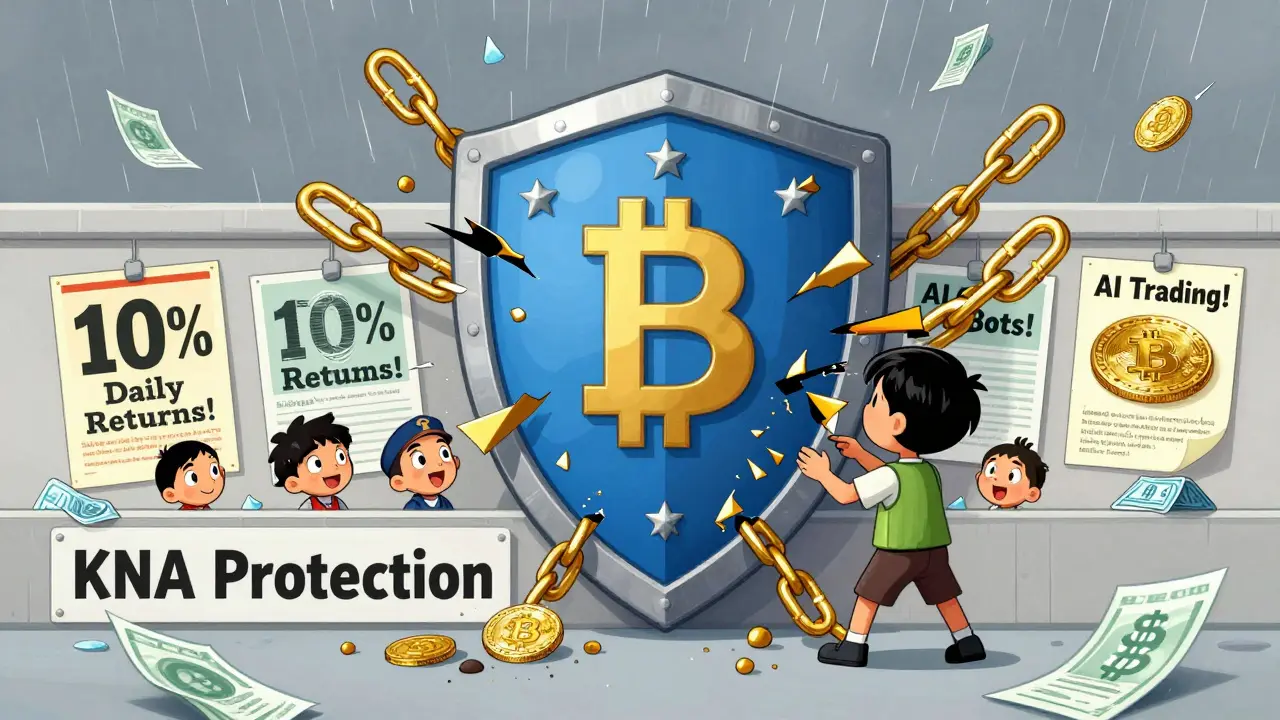
Who’s Behind It?
The Karen National Army (KNA) isn’t just a local militia. It’s a transnational criminal organization with its own army, police force, and courts - all funded by crypto scams. The KNA controls Shwe Kokko because Myanmar’s military turned a blind eye. In exchange for a share of the profits, the junta lets the KNA operate freely. That’s why the U.S. didn’t just sanction the scam companies. They also named Saw Chit Thu, his two sons, and the KNA itself as sanctioned entities. This is a key shift. Before, sanctions targeted individual fraudsters. Now, they’re going after the entire structure - the protectors, the enablers, the financiers. The U.S. is using four different executive orders at once:- E.O. 13851 - Targets transnational criminal organizations.
- E.O. 13694 - Addresses malicious cyber activity.
- E.O. 13818 - Punishes serious human rights abuses.
- E.O. 14014 - Strikes at those undermining Myanmar’s stability.
What This Means for You
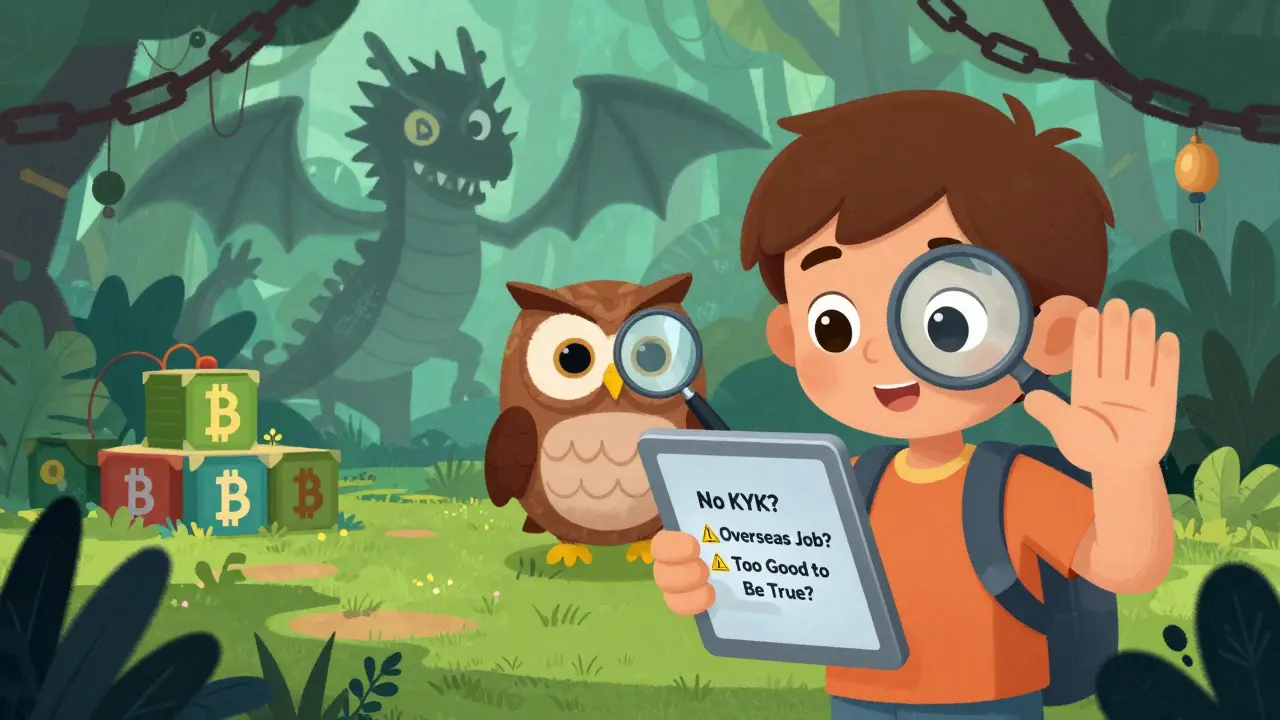
If you’re an American investor, this doesn’t change your daily crypto habits - but it should change how you think about "guaranteed returns." Here’s what to watch for:- Too-good-to-be-true offers: "Earn 10% daily on Bitcoin?" That’s a scam. Real crypto doesn’t work like that.
- Unregulated platforms: If a site doesn’t have KYC (know your customer) checks, avoid it.
- Job offers from overseas: If someone contacts you out of the blue with a "remote crypto job," verify it. Many victims were recruited this way.
What Happens Next?
This is just the beginning. The Treasury says this action "builds on a series of actions taken in the last several months." That means more sanctions are coming. They’re likely to target:- Crypto exchanges that ignore U.S. compliance rules
- Chinese and Russian firms that help launder the stolen funds
- Banking partners in the UAE and Turkey that process payments for these networks
Final Thought
This isn’t just about money. It’s about people. Thousands of victims - some as young as 16 - are locked in cages, forced to lie to strangers every day. And American families are losing their life savings because someone clicked on a Facebook ad. The U.S. sanctions are a warning: you can’t hide behind borders when you’re stealing from Americans. And you can’t hide behind crypto when you’re committing crimes against humanity.Are U.S. citizens allowed to send crypto to entities in Myanmar?
No. U.S. citizens and companies are strictly prohibited from any financial transactions - including crypto transfers - with any entity sanctioned by OFAC. This includes wallets, exchanges, or platforms linked to the nine Myanmar-based entities targeted in September 2025. Violating this rule can result in heavy fines or criminal charges.
Can I still trade crypto if I live outside the U.S.?
Yes - but with caution. If you’re outside the U.S., U.S. sanctions don’t directly apply to you. However, if you use U.S.-based exchanges (like Coinbase or Kraken), they will block transactions with sanctioned entities automatically. Also, many international exchanges now follow U.S. compliance rules to avoid losing access to the global financial system. If you’re sending crypto to a wallet linked to Shwe Kokko, you risk your funds being frozen or your account banned.
How do I know if a crypto platform is linked to these scams?
Check the OFAC sanctions list directly at treasury.gov/sanctions. Look for any entity names, wallet addresses, or domain names listed under the Myanmar or KNA designations. Avoid any platform that doesn’t clearly state its location, ownership, or compliance policies. If a site uses vague terms like "global operations" or "decentralized services" without a physical address, treat it as high-risk.
Did the sanctions shut down the scam centers in Shwe Kokko?
Not immediately. The sanctions cut off their money flow and made it harder to move funds, but they didn’t raid the compounds. That’s a job for local forces - and the KNA still controls the area. However, the sanctions have made it harder for scammers to cash out. Many are now stuck with millions in crypto they can’t convert without getting caught. This is slowing the operations down, and it’s opening the door for future international pressure.
What should I do if I think I’ve been targeted by one of these scams?
If you’ve sent money to a crypto wallet linked to a Myanmar-based scam, contact the FBI’s Internet Crime Complaint Center (IC3) immediately at ic3.gov. Even if you’re overseas, you can file a report. Also, alert your bank or crypto exchange. While recovering funds is unlikely, reporting helps build the case that leads to more sanctions and arrests. Never pay a "recovery agent" who claims they can get your money back - they’re often part of the same network.


Elizabeth Smith
February 23, 2026 AT 08:58This is what happens when you let greed run wild without moral boundaries
People think crypto is just about money but it's really about power
And power without ethics turns into slavery
We're not just fighting scammers here-we're fighting the decay of human decency
And honestly? It's about time someone did something
Robert Kromberg
February 24, 2026 AT 11:28I appreciate the clarity here. It's easy to get lost in the tech jargon around crypto, but this breaks it down to human terms. These aren't just financial crimes-they're atrocities. The fact that children are being forced into this? That's the real headline.
Daisy Boliaan
February 24, 2026 AT 14:44I'm literally crying right now. I had a cousin who got lured into one of these places. She never came back. They told her she'd be a "remote customer service rep". I still have her last text: "It's so beautiful here, the mountains are insane". Those mountains? They're prison walls. I'm so glad someone finally called this what it is. #JusticeForThem
Nicki Casey
February 26, 2026 AT 10:21The U.S. government has consistently weaponized its financial hegemony to enforce extraterritorial jurisdiction under the guise of moral superiority. This is not justice-it is economic imperialism cloaked in humanitarian rhetoric. The fact that foreign institutions are being coerced into compliance via threats of exclusion from the dollar system reveals a deeper pathology: the normalization of unilateral coercion under the banner of human rights. One must ask: if the U.S. can sanction entities in Myanmar for alleged human rights abuses, why not sanction its own domestic prisons, or its drone strikes in Yemen? The hypocrisy is not merely evident-it is systemic.
Jessica Carvajal montiel
February 27, 2026 AT 04:15Let me guess-the real story is that the U.S. is using this to justify more surveillance and control over crypto. They don't care about victims. They care about control. This whole thing smells like a pretext to shut down decentralized finance so they can push the digital dollar. And don't tell me the KNA isn't being used as a convenient villain to distract from the fact that the U.S. Treasury itself has been laundering money through shell companies since the '80s. I've seen the documents. They're not here to help. They're here to monopolize.
Sean Logue
February 28, 2026 AT 15:17I’ve been to Thailand. Shwe Kokko is like a ghost city full of neon lights and silence. No locals. Just compounds. You can feel the fear. The fact that this is happening so close to tourist zones and no one talks about it? That’s the real horror. We’re all just scrolling past it like it’s an ad.
Carl Gaard
March 2, 2026 AT 04:43I just wanna say… I’m so glad this is finally getting attention 😭 I work in cybersecurity and I’ve seen the reports. The scale is insane. These people aren’t just stealing money-they’re stealing lives. And the fact that the U.S. is going after the whole system? That’s huge. 🙏 Please don’t ignore this. Share it. Talk about it. These victims need voices.
Robert Conmy
March 3, 2026 AT 05:29You people are naive. Sanctions don't work. They never have. All this does is push the scammers into even darker corners. Now they'll use Monero, or Zcash, or maybe even AI-generated wallets that auto-rotate every 17 seconds. The U.S. thinks it's playing chess but it's just rearranging deck chairs on the Titanic. And don't even get me started on how this is just another excuse to kill privacy. Crypto isn't the problem. Control is.
Lilly Markou
March 3, 2026 AT 05:37The systemic indifference to human suffering in the name of technological innovation is profoundly disturbing. The commodification of labor, the erasure of identity, the normalization of coercion under the banner of "remote employment"-these are not anomalies. They are the logical endpoint of late-stage capitalism fused with unregulated digital finance. The U.S. sanctions, while symbolically significant, do not address the root pathology: the global appetite for effortless gain at the expense of the vulnerable. We must confront our complicity.
McKenna Becker
March 4, 2026 AT 13:50Crypto doesn't cause this. Greed does. And the people who built these systems knew exactly what they were doing. This isn't a bug. It's a feature.
precious Ncube
March 6, 2026 AT 12:33If you're still buying into "guaranteed returns," you deserve to lose everything. This isn't a warning-it's a public service announcement for the stupid.
Jan Czuchaj
March 8, 2026 AT 05:04I've spent years working with victims of online fraud across Southeast Asia. What most people don't realize is that these scams aren't just about money-they're about psychological domination. The victims aren't just forced to scam people. They're forced to believe they're part of something powerful. They're given fake titles, fake pay stubs, fake promotions. It's not just coercion-it's brainwashing. And when they finally break? They don't want to leave. They've been taught that the outside world is the real scam. That's the most tragic part. The sanctions cut off the money, but healing? That takes decades.
George Suggs
March 8, 2026 AT 11:26This is why we need better education. Not more laws. Not more sanctions. Just real info. People don't know how to spot a scam because no one ever taught them. Schools should have a module on crypto scams like they do on sex ed. Simple. Direct. No fluff.
Dianna Bethea
March 8, 2026 AT 20:24If you're reading this and you've ever gotten a DM like "Hey, wanna make 10k/month from home?"-please, stop. Block them. Report them. You might think it's harmless but that DM is the first step in a nightmare. I've helped 3 people escape these places. One was 17. She had a tattoo of a butterfly on her wrist. They made her cover it with a bandage every day. She said it was "bad luck". I cried for a week after talking to her. You can't unsee this. But you can stop it from happening again. Just say no.
Felicia Eriksson
March 8, 2026 AT 22:50I just want to say thank you to everyone who made this happen. It's easy to feel helpless, but this proves that pressure works. Keep speaking up. Keep sharing. One post can change a life.
aaron marp
March 10, 2026 AT 20:18I think we're missing the bigger picture. The real solution isn't sanctions-it's rebuilding trust in institutions. People fall for these scams because they're desperate. They're lonely. They're broke. And the system failed them first. If we want to stop this, we need jobs, mental health support, and real economic opportunity-not just blockchain audits.
Patrick Streeb
March 11, 2026 AT 21:22The legal and moral implications of this action are of considerable significance. The invocation of multiple executive orders simultaneously, targeting not merely actors but structural enablers, represents a paradigmatic shift in the application of extraterritorial sanctions. It is, in essence, an assertion of normative authority over transnational criminal enterprises through the instrumentalization of financial architecture. While the humanitarian imperative is undeniable, one must also consider the precedent set for future applications of such measures against non-state actors in other jurisdictions. The potential for overreach, though currently justified, remains a matter of enduring legal scrutiny.
Alyssa Herndon
March 11, 2026 AT 23:21I used to work in tech support for a crypto startup. We had a client from Myanmar who kept asking if we could "route payments through a non-sanctioned wallet." I didn't think much of it at the time. Now I wonder if I was talking to someone who was being forced to do it. I wish I'd asked more questions. I wish I'd reported it. I carry that guilt.
Jeff French
March 13, 2026 AT 07:43The KNA's monetization of human trafficking via crypto infrastructure represents a novel convergence of asymmetric warfare and financial innovation. The use of decentralized protocols to obfuscate transactional trails, coupled with state-tolerated territorial control, creates a feedback loop where criminal enterprise becomes self-sustaining. This is not merely a law enforcement issue-it is a systemic failure of global governance architecture. The sanctions, while tactically sound, are strategically insufficient without coordinated multilateral enforcement and blockchain-level forensic intervention.
Elana Vorspan
March 13, 2026 AT 17:08I just want to say I'm so proud of how far we've come. This is the kind of thing that gives me hope for humanity. 🌍💖 We can do hard things when we choose to. Thank you to everyone who fought for this.