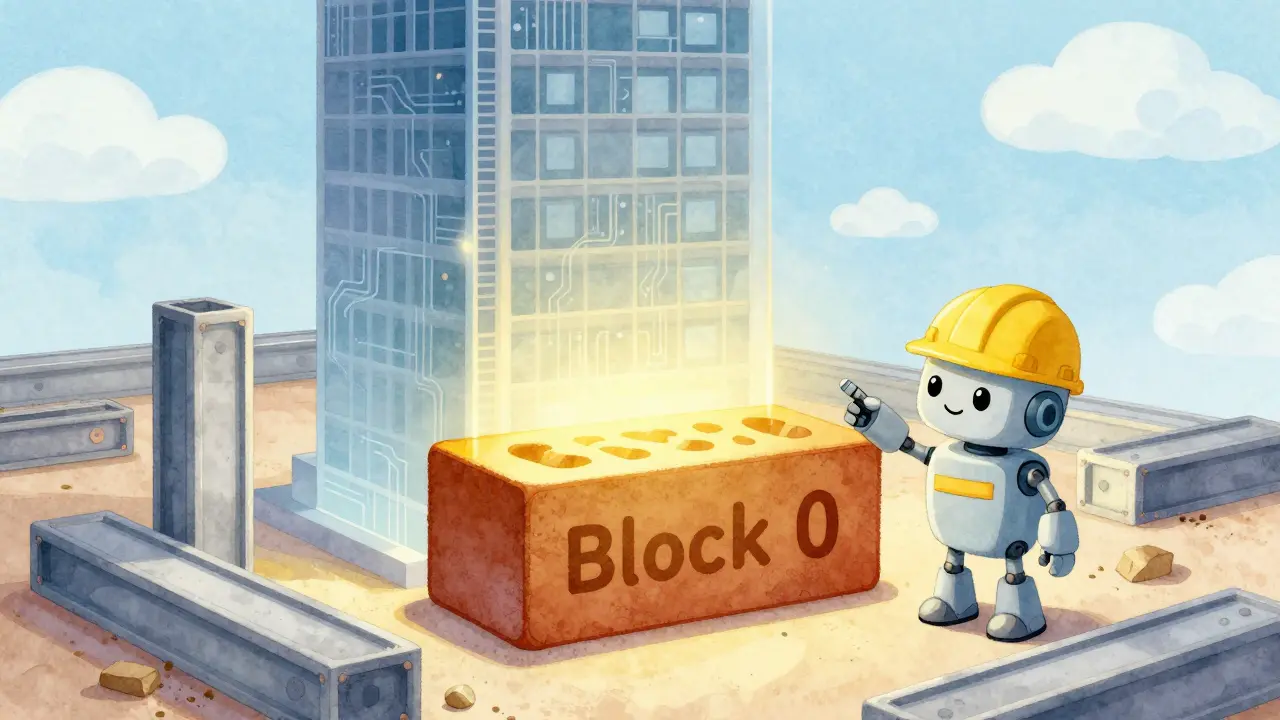
Imagine building a skyscraper. Before you pour concrete or steel beams, you need a solid foundation. If that foundation is cracked or shifted, the entire structure collapses. In the world of digital currencies and distributed ledgers, the genesis block is that foundation. It is the very first block created on any blockchain network, serving as the immutable starting point for every transaction that follows.
Without a genesis block, there is no chain. There is no history to verify. There is no trust. This single piece of data defines the rules, sets the initial state, and anchors the security of networks like Bitcoin and Ethereum. But what exactly is inside this "Block 0," and why does it matter so much to your digital assets?
The Origin Story: Bitcoin’s First Block
To understand the genesis block, we have to look back at January 3, 2009. On this day, an anonymous person or group known as Satoshi Nakamoto mined the first block of the Bitcoin network. This wasn't just a random event; it was the birth of decentralized finance.
This specific block, often called Block 0, contains a timestamp, a unique cryptographic hash, and a hidden message in its coinbase transaction. That message reads: "The Times 03/Jan/2009 Chancellor on brink of second bailout for banks." Why include a newspaper headline from over a decade ago? It served two purposes. First, it proved the block could not have been created before that date, establishing a clear timeline. Second, it signaled Bitcoin's core philosophy: creating a financial system independent of central banks and government bailouts.
Unlike every other block in the Bitcoin ledger, the genesis block has no previous block to reference. In a normal blockchain, each block points to the one before it using a cryptographic hash. The genesis block breaks this pattern by having a null value for its "previous block hash." It stands alone, unconnected to anything prior, because nothing came before it.
How the Genesis Block Works Technically
You might wonder how a computer network agrees on where to start. The answer lies in code. The genesis block is hardcoded into the client software of the blockchain. When you download a Bitcoin node or connect to the Ethereum network, your device automatically knows what the first block looks like.
Here is what makes the technical architecture unique:
- No Previous Hash: As mentioned, it doesn’t link to a prior block. It is the root.
- Hardcoded Parameters: It sets initial network rules, such as the difficulty target and maximum block size.
- Unique Identifier: Every blockchain has a distinct genesis hash. For Bitcoin, this hash is
000000000019d6689c085ae165831e934ff763ae46a2a6c172b3f1b60a8ce26f. This string of characters is permanent and cannot be changed. - Unspendable Reward: The first mining reward (50 BTC in Bitcoin’s case) is technically generated but is programmed to be unspendable. Satoshi Nakamoto did not mine these coins; they were burned to prove fairness and prevent early hoarding.
This setup ensures that every participant in the network starts with the exact same baseline. If your wallet software expects a different genesis block than the rest of the network, you simply cannot join the conversation. You would be speaking a different language.
| Network | Launch Date | Creator | Initial Allocation Method | Key Symbolic Message |
|---|---|---|---|---|
| Bitcoin | Jan 3, 2009 | Satoshi Nakamoto | Pre-mined (unspendable) | Newspaper headline criticizing bank bailouts |
| Ethereum | July 30, 2015 | Vitalik Buterin & Team | Public Crowdsale | Commitment to decentralization and smart contracts |
| Ripple (XRP) | 2012/2013 | Ripple Labs | Centralized Pre-mine | Focus on fast cross-border payments |
Why the Genesis Block Ensures Security
Security in blockchain relies on immutability-the idea that once data is written, it cannot be altered. The genesis block is the anchor of this immutability. Because it is hardcoded into the software, changing it would require rewriting the source code for every node on the network simultaneously. This is practically impossible.
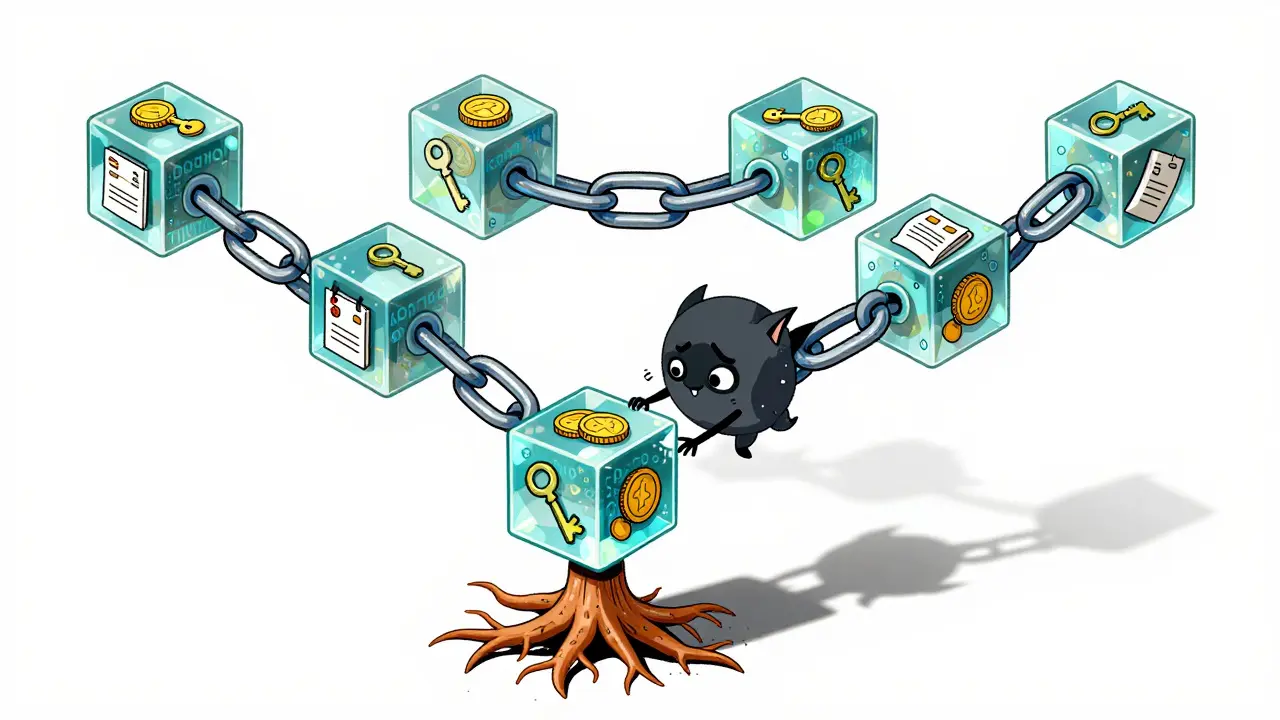
If someone tried to alter the data in the genesis block, its cryptographic hash would change. Since every subsequent block references the hash of the previous one, a change at the bottom would invalidate every single block above it. The entire chain would break. Nodes would reject the altered version because it wouldn't match their hardcoded starting point.
This creates a "root of trust." All participants agree that the history begins at this specific point. Without this shared agreement, the network would fragment. Imagine if half the users thought the chain started in 2009 and the other half thought it started in 2010. They couldn't transact with each other. The genesis block prevents this fragmentation by providing a single, verifiable origin story.

Different Ways to Start a Chain
Not all genesis blocks are created equal. While Bitcoin’s approach was organic and decentralized, other projects have taken different paths to establish their initial state. How a blockchain begins often reflects its economic model and governance structure.
Proof-of-Work Chains (Like Bitcoin): These rely on miners solving complex mathematical puzzles. The genesis block is mined, but the reward is often unusable. The network grows organically as more miners join.
Crowdsale-Based Chains (Like Ethereum): Ethereum’s genesis block was created after a public fundraising campaign. The initial distribution of Ether tokens was determined by who bought in during the sale. The genesis block recorded these initial balances, effectively freezing the state of the network at launch.
Permissioned or Enterprise Chains: Companies like IBM or Walmart may use private blockchains for supply chain tracking. Their genesis blocks are tailored to specific business needs. They might pre-load data about existing inventory or set strict access controls. Here, the genesis block acts less like a public record and more like a digital contract between trusted partners.
The Symbolic Power of Block 0
Beyond the code, the genesis block carries cultural weight. It is a historical marker. Developers often embed Easter eggs, messages, or data that reflect the project’s mission. For example, some newer cryptocurrencies embed quotes from philosophers or political manifestos in their genesis blocks to signal their ideological stance.
This tradition honors Bitcoin’s legacy. It reminds users that blockchain technology isn’t just about moving money; it’s about challenging established systems. Whether it’s resisting censorship, promoting transparency, or enabling decentralized applications (dApps), the genesis block sets the tone for the network’s identity.
As we move into 2026, new challenges arise. Quantum computing threats are pushing developers to design quantum-resistant cryptography. Future genesis blocks may need to incorporate advanced encryption standards to ensure long-term security. However, the core principle remains unchanged: you need a trusted starting point to build a secure future.
Common Misconceptions About Genesis Blocks
Let’s clear up a few myths that often confuse newcomers.
Myth 1: The creator owns the genesis block rewards. In Bitcoin, the 50 BTC reward in the genesis block is unspendable. Satoshi Nakamoto never controlled those coins. They exist only to validate the block’s creation. Later blocks were mined and spent, but Block 0’s reward is gone forever.
Myth 2: Any block can be the genesis block. No. The genesis block is defined by the software. If you try to create a new chain without referencing the correct genesis parameters, your nodes won’t sync with the main network. You’d be running a fork, not the real thing.
Myth 3: The genesis block can be updated. It cannot. Its data is immutable. If a protocol upgrade is needed, it happens through subsequent blocks and consensus mechanisms, not by altering the foundation.
Why This Matters for You
If you hold cryptocurrency or use blockchain-based services, understanding the genesis block helps you appreciate the security of your assets. Your wallet connects to a network that traces every transaction back to a single, unchangeable point in time. This traceability is what gives digital currency its value.
When you send Bitcoin, you’re participating in a chain that started over 15 years ago. The integrity of that chain depends on the fact that everyone agrees on where it began. The genesis block is the silent guardian of that agreement. It doesn’t flash lights or make headlines, but without it, the entire digital economy built on blockchain would crumble.
Can the genesis block be changed?
No, the genesis block cannot be changed. It is hardcoded into the blockchain software and serves as the immutable root of the network. Altering it would change its cryptographic hash, invalidating every subsequent block in the chain and causing the network to reject the modified version.
Who owns the coins in the genesis block?
In most major blockchains like Bitcoin, the coins generated in the genesis block are unspendable. For example, Satoshi Nakamoto did not receive the 50 BTC reward from Block 0; it was burned to demonstrate fairness. Ownership of initial tokens varies by network, with some using crowdsales or centralized allocations.
What is the difference between the genesis block and other blocks?
The primary difference is that the genesis block has no previous block to reference. All other blocks contain a cryptographic hash pointing to the block before them. The genesis block uses a null value for this field, marking it as the absolute beginning of the chain.
Why does Bitcoin’s genesis block have a newspaper headline?
The headline "Chancellor on brink of second bailout for banks" was embedded to prove the block’s creation date and to symbolize Bitcoin’s purpose: creating a decentralized financial system independent of traditional banking institutions and government interventions.
Is the genesis block the same for all cryptocurrencies?
No, each blockchain has its own unique genesis block with a distinct hash and set of parameters. While the concept is similar across networks, the specific data, launch dates, and initial allocation methods vary significantly between projects like Bitcoin, Ethereum, and Ripple.
How does the genesis block ensure network security?
The genesis block acts as a root of trust. Because it is hardcoded and immutable, all nodes in the network agree on the starting point of the ledger. This prevents fraud and network fragmentation, ensuring that every transaction can be traced back to a verified, tamper-proof origin.
What happens if I download a node with a different genesis block?
If your node software expects a different genesis block than the majority of the network, it will fail to sync. You would essentially be isolated from the main network, unable to validate transactions or participate in consensus, as your chain’s history would not match the accepted standard.