Quick Summary
- Wrapped tokens are blockchain assets that represent value from another chain, enabling use in ecosystems like Ethereum.
- The process involves locking the original asset with a custodian or protocol and minting an equivalent amount of the wrapped version on the target chain.
- Unwrapping reverses this: you burn the wrapped token to release the original asset back on its native chain.
- Popular examples include Wrapped Bitcoin (wBTC), Wrapped Ether (wETH), and Tether Gold (XAUT).
- While they solve critical interoperability issues, wrapped tokens introduce counterparty risk and reliance on centralized bridges or federations.
You have Bitcoin. You want to use it in a decentralized lending protocol on Ethereum. But Bitcoin doesn't speak Solidity. It lives on its own isolated ledger. This is where the concept of wrapping comes into play. It’s not just about packaging; it’s about translation. In the world of blockchain, wrapping turns a native asset into a compatible format for a different network, unlocking liquidity and utility that would otherwise remain trapped.
Without wrapping, your crypto assets are siloed. Your Bitcoin stays on the Bitcoin chain. Your Ethereum stays on Ethereum. To move value between these islands efficiently without selling and rebuying (which triggers taxes and price slippage), we need a bridge. That bridge is the wrapped token.
What Is Wrapping and Why Do We Need It?
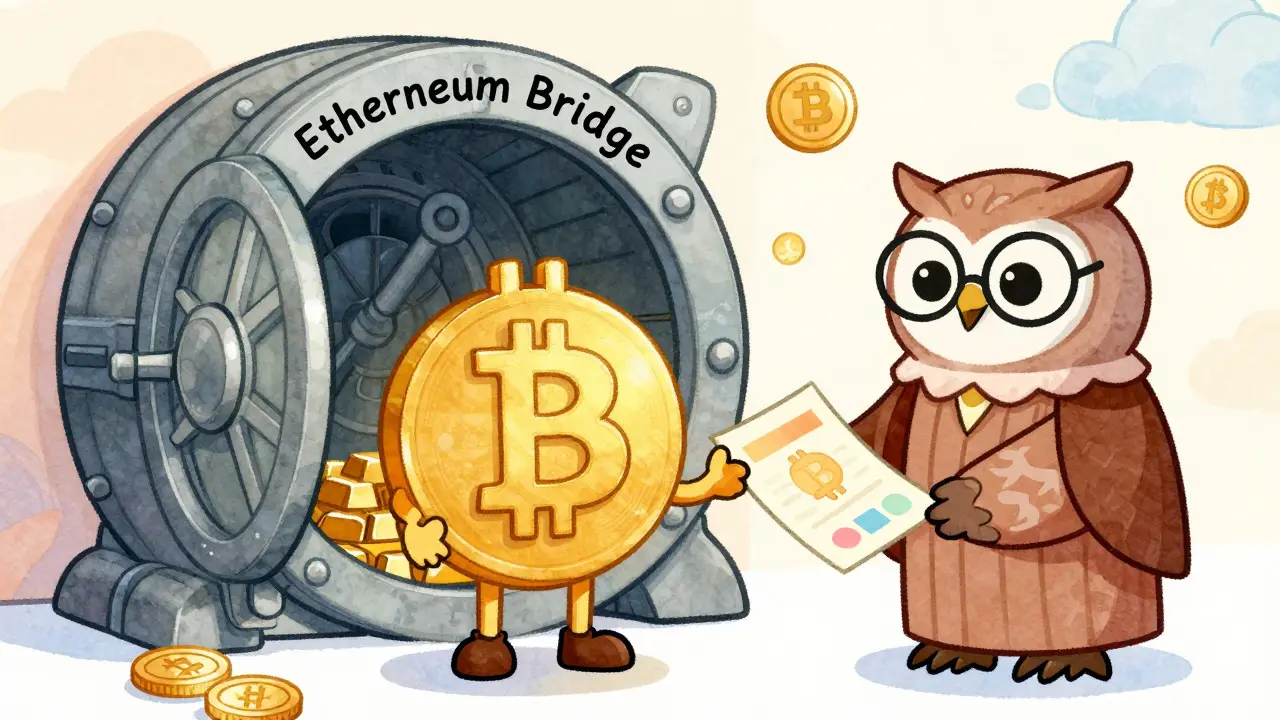
Imagine you have a physical gold bar. You want to trade it in a market that only accepts paper certificates representing gold. You don't melt down the bar. Instead, you hand it over to a trusted vault. The vault stores your bar safely and gives you a certificate worth exactly one ounce of gold. You can now trade that certificate freely. When you're done, you return the certificate, and the vault hands back your physical gold. This is the core logic behind wrapping.
In blockchain terms, wrapping is the process of locking a cryptocurrency on its native chain and issuing a corresponding token on a different blockchain that maintains a 1:1 peg to the original asset.
Why do we do this? Primarily for compatibility. Most decentralized finance (DeFi) applications are built on Ethereum because it has the largest developer community and smart contract capabilities. However, many users hold assets on other chains like Bitcoin, Solana, or Avalanche. By wrapping these assets, developers create ERC-20 compliant versions that can interact seamlessly with Ethereum-based protocols like Uniswap, Aave, or Compound.
The Mechanics: How the Wrapping Process Works
The technical execution varies depending on whether the system is centralized or decentralized, but the fundamental steps remain consistent. Let's look at how a typical user experience flows.
- Initiation: You connect your wallet to a wrapping service (like a bridge interface or a specific token website). You specify the amount of native asset you wish to wrap (e.g., 1 BTC).
- Locking: You send the native asset to a designated custody address. In centralized models, this is controlled by a federation or company. In decentralized models, it might be locked in a smart contract or staked as collateral.
- Minting: Once the network confirms the transaction, the wrapping protocol mints an equivalent amount of the wrapped token on the target chain (e.g., 1 wBTC on Ethereum). These tokens are sent to your Ethereum wallet address.
- Usage: You now hold an ERC-20 token. You can swap it, lend it, or provide liquidity in any DeFi pool that accepts wBTC.
This process relies heavily on trust mechanisms. Who holds the keys to the locked Bitcoin? If it's a single company, that's a central point of failure. If it's a multi-signature wallet managed by multiple auditors, the risk is distributed but still exists. Understanding this distinction is crucial before you wrap significant amounts of capital.
Common Types of Wrapped Assets
Not all wrapped tokens are created equal. They fall into different categories based on what they represent and how they are secured.
| Token Example | Underlying Asset | Mechanism | Risk Profile |
|---|---|---|---|
| Wrapped Bitcoin (wBTC) | BTC | Federation-managed custody | Medium-High (Counterparty Risk) |
| Wrapped Ether (wETH) | ETH | Smart Contract Lock/Mint | Low (Code Risk Only) |
| Synthetix sUSD | Crypto Collateral | Over-collateralized Debt Position | Medium (Liquidation Risk) |
| Tether Gold (XAUT) | Physical Gold | Centralized Custody | High (Custodial + Regulatory) |
Wrapped Ether (wETH) is unique because it operates on the same chain as its underlying asset. Since ETH is the native currency of Ethereum, it doesn't follow the standard ERC-20 token rules. Smart contracts expect inputs that behave like tokens (with functions like transfer() and balanceOf()). Native ETH lacks these functions. So, wETH is simply a smart contract that locks up real ETH and issues an ERC-20 receipt. It’s a technical necessity rather than a cross-chain solution.
Wrapped Bitcoin (wBTC), on the other hand, is a true cross-chain asset. Because Bitcoin cannot run smart contracts, a group of merchants and custodians (the Federation) must lock the BTC and issue the wBTC on Ethereum. This introduces a layer of human governance and potential censorship, which purists dislike but pragmatists accept for the utility gained.
The Unwrapping Process: Getting Your Original Asset Back
So, you’ve used your wBTC in a yield farm, earned some interest, and now you want your Bitcoin back. How does unwrapping work?
Unwrapping is essentially the reverse of wrapping. Here is the step-by-step flow:
- Burning: You send your wrapped tokens (e.g., wBTC) back to the official burning address or call the
burn()function on the smart contract. - Verification: The system verifies that the tokens are destroyed and removed from circulation. The total supply of the wrapped token decreases.
- Release: The custodian or protocol releases the equivalent amount of the native asset (BTC) from the cold storage or smart contract lock.
- Receipt: The native Bitcoin is sent to your specified Bitcoin wallet address.
There is often a fee associated with this process, either in gas fees for the Ethereum transaction or a small percentage taken by the custodian service. Also, keep in mind that cross-chain transactions are not instant. While Ethereum confirmations take minutes, Bitcoin block times average 10 minutes, and finality requires several blocks. Expect delays ranging from 30 minutes to a few hours depending on network congestion.

Risks and Considerations: It’s Not Free Money
Before you wrap your entire portfolio, consider the risks. The biggest issue is counterparty risk. When you wrap BTC to get wBTC, you are trusting the entity holding your Bitcoin. If that entity gets hacked, goes bankrupt, or decides to freeze withdrawals, your wBTC could become worthless paper.
Then there is smart contract risk. Even if the custodian is safe, the code governing the wrapped token could have bugs. Historically, bridges and wrapping protocols have been prime targets for hackers. Billions of dollars have been lost due to vulnerabilities in cross-chain messaging protocols.
Finally, consider depegging events. In times of extreme market volatility, the price of a wrapped token might temporarily diverge from its underlying asset. If wBTC trades at $95 while BTC is at $100, arbitrageurs usually fix this quickly. But during panic, liquidity dries up, and you might be forced to sell at a discount.
Future Trends: Trustless Bridging
The industry is moving away from centralized federations toward trustless solutions. Protocols like LayerZero, Wormhole, and Axelar aim to create interoperable networks where assets can move without relying on a single custodian. These systems use cryptographic proofs and validator networks to verify transactions across chains, reducing the need for trusted intermediaries.
Additionally, native account abstraction and Layer 2 rollups are changing the landscape. As more activity moves to L2s like Arbitrum or Optimism, the need to wrap assets for mainnet Ethereum decreases. Instead, users wrap assets specifically for the L2 environment, often using faster, cheaper bridges designed for those specific networks.
Is wrapped Bitcoin (wBTC) the same as Bitcoin?
No. wBTC is an ERC-20 token on the Ethereum blockchain that represents Bitcoin. It tracks the price of Bitcoin 1:1, but it is technically a different asset. You cannot spend wBTC directly on the Bitcoin network; you must unwrap it first to get actual BTC.
How long does it take to unwrap a token?
It depends on the networks involved. Unwrapping wETH to ETH is nearly instant (just one Ethereum transaction). Unwrapping wBTC to BTC takes longer because it requires confirmation on both Ethereum and Bitcoin networks, typically taking 30 minutes to 2 hours.
Are wrapped tokens safe?
They carry additional risks compared to holding native assets. The primary risks are smart contract bugs and custodial failure. Always research the auditing history of the wrapping protocol and the reputation of the custodians before locking large amounts of capital.
Why do I need wETH if I already have ETH?
Native ETH does not follow the ERC-20 standard, which means it lacks certain functions required by many DeFi smart contracts. wETH wraps your ETH into an ERC-20 token, allowing it to be used in swaps, liquidity pools, and lending protocols that expect tokenized assets.
Can wrapped tokens lose their peg?
Yes. While they are designed to maintain a 1:1 value with the underlying asset, market panic, liquidity shortages, or hacks can cause temporary depegging. This creates arbitrage opportunities but also risks for holders who need to exit quickly.