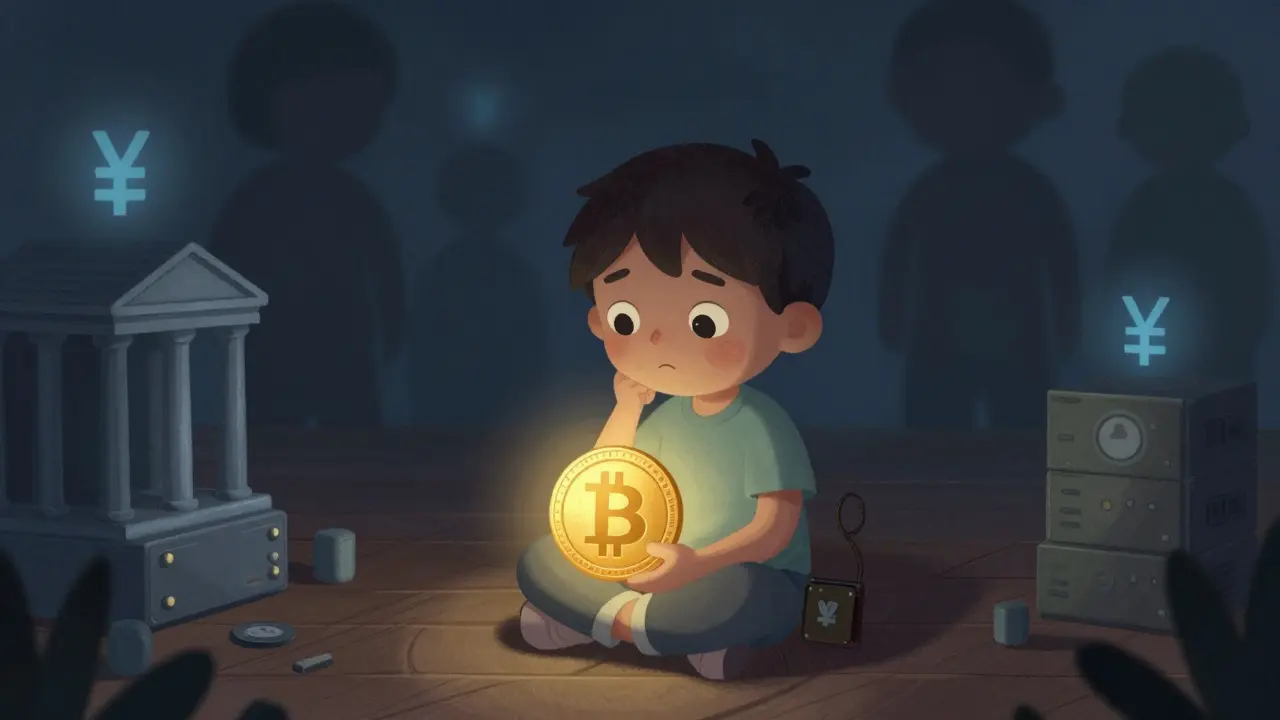
China doesn't just regulate cryptocurrency - it erased it from its financial system. Since 2021, the government has enforced a total ban on all crypto-related activities, leaving Bitcoin holders in a legal gray zone with no protection, no recourse, and no clear path forward. If you own Bitcoin and live in China, or have ties to the country, this isn't a theoretical policy - it's a daily reality that affects how you store, move, and even think about your assets.
What Exactly Is Banned?
The ban isn't a single law. It's a web of rules that started in 2013 and tightened dramatically by 2021. Today, every part of the crypto ecosystem is illegal inside China:- Operating a cryptocurrency exchange - banned
- Trading Bitcoin or altcoins - banned
- Accepting crypto as payment - banned
- Providing banking services for crypto users - banned
- Mining Bitcoin - banned
- Even promoting crypto content online - banned
What Happens to Your Bitcoin If You Live in China?
Here's the brutal truth: owning Bitcoin isn't illegal. But doing anything with it is. You can hold Bitcoin in a private wallet. No one will come to your door to seize your hardware wallet. But if you try to sell it, convert it to yuan, or even send it to a friend who uses a Chinese bank account - you risk serious consequences. Banks monitor every transaction. If your account receives funds from a wallet linked to a known crypto exchange, it triggers an automatic flag. You’ll get a call from your bank asking where the money came from. If you say "Bitcoin," you’re likely to have your account frozen for weeks while investigators dig through your history. Many people report being asked to prove their income source for months - and some have been denied loans or credit cards afterward. Even holding Bitcoin on a non-Chinese exchange becomes risky. If you log in from a Chinese IP address, or if your phone number is registered in China, exchanges are legally required to freeze your account. Some users have lost access to their funds entirely after being flagged.Why Did China Ban Crypto - And Why Won’t It Lift It?
China’s reasons are clear: control, stability, and sovereignty. First, Bitcoin threatens the government’s control over money. The People’s Bank of China (PBOC) spent over a decade building its own digital currency - the Digital Yuan (e-CNY). It’s not meant to compete with Bitcoin. It’s meant to replace cash and credit cards with a system the state can track, freeze, or limit at will. Crypto’s decentralization is the opposite of that. Second, crypto trading is volatile. In 2021, Bitcoin crashed 50% in a week. If millions of Chinese investors lost money overnight, it could trigger bank runs, panic withdrawals, and social unrest. Regulators don’t want that risk inside their financial system. Third, mining was draining power. China once produced 70% of the world’s Bitcoin. But those mining farms used more electricity than entire countries. In 2021, the government shut them down overnight - not just for environmental reasons, but because energy was being diverted from factories, hospitals, and homes. There’s no sign China will change course. Even in 2025, rumors of a "partial legalization" spread online - but every single one was fake. The government has doubled down on the Digital Yuan. It’s now used by over 300 million people. That’s the future they’re betting on - not Bitcoin.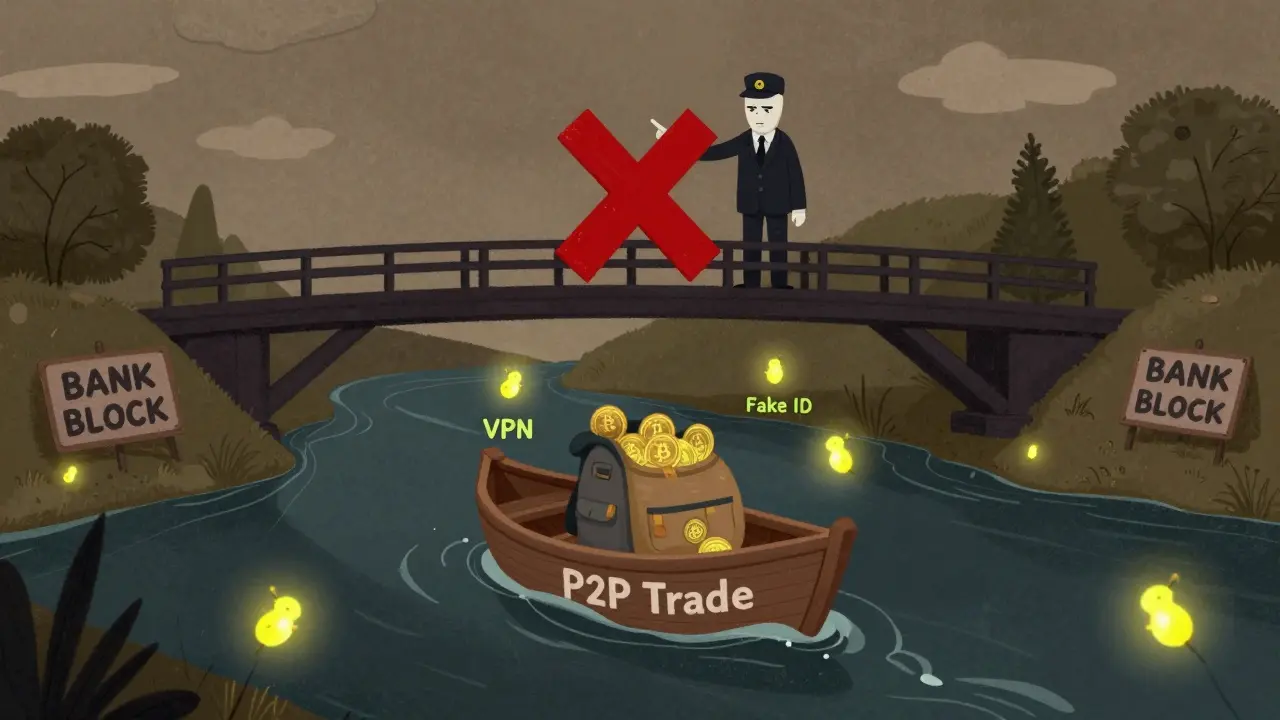
How Do People Still Trade Crypto in China?
Despite the ban, crypto trading hasn’t disappeared - it just went underground. Many Chinese users rely on peer-to-peer (P2P) platforms like LocalBitcoins or Paxful, where buyers and sellers connect directly. Transactions happen through bank transfers, cash meetups, or even QR code payments. These aren’t legal, but enforcement is patchy. Others use offshore exchanges with fake IDs or VPNs to hide their location. Some even use family members living abroad to hold their wallets and send funds back as "gifts" or "family support." These work - for now. But if you’re caught, you could face fines, account freezes, or worse. The biggest risk? Scams. With no legal protection, if someone steals your Bitcoin through a fake P2P deal, you can’t go to court. You can’t call the police. You’re on your own.What About Bitcoin Holders Outside China?
If you’re not in China, the ban doesn’t directly affect you. But it still matters. China was once home to over 70% of global Bitcoin mining. When the ban hit, miners fled to the U.S., Kazakhstan, and Nigeria. That shifted mining power and changed the network’s energy footprint. Today, Bitcoin mining is more decentralized - but also more expensive. More importantly, China’s ban removed one of the largest potential markets for crypto adoption. If 1.4 billion people could legally buy Bitcoin tomorrow, prices could spike overnight. That’s why global traders watch every rumor - even false ones - like a live ticker. The 2025 "ban rumor" that went viral on Elon Musk’s X platform? It wasn’t true. But it caused a 12% drop in Bitcoin’s price in 24 hours. Why? Because markets fear China. Not because they believe the ban will change - but because they know it could.
What’s the Real Risk for Bitcoin Holders?
The biggest danger isn’t losing your coins. It’s losing access to the real economy. If you need to pay rent, buy groceries, or fund your child’s education - and your wealth is locked in Bitcoin - China’s ban turns your assets into digital ghosts. You can’t spend them. You can’t cash them out. You can’t even prove you own them without risking your bank account. And if you’re a Chinese citizen living abroad? You still can’t use Chinese banks to move crypto funds. Even if you live in New York, if your bank account was opened in Shanghai, your transactions are monitored. There’s no legal path to convert Bitcoin to yuan. No licensed exchange. No government-approved broker. No court that will hear a dispute over a crypto sale. That’s not a loophole - it’s a wall.What’s the Future?
Don’t expect China to reverse course. The Digital Yuan is too far along. The infrastructure is built. The training is done. The state won’t give up control for a decentralized alternative. The only hope for Chinese Bitcoin holders is time - and patience. Maybe in 10 years, when the Digital Yuan is fully embedded, and Bitcoin has proven itself as a global asset, China might allow limited access. But even then, it won’t be free. It’ll be controlled. Licensed. Monitored. For now, the message is clear: if you live in China, Bitcoin is a personal asset - not a financial tool. Hold it. Don’t trade it. Don’t talk about it. And don’t expect the system to protect you if things go wrong.Is it illegal to own Bitcoin in China?
No, owning Bitcoin is not illegal. You can hold it in a private wallet without breaking the law. But any action involving buying, selling, trading, or using Bitcoin for payments is banned. The government targets transactions, not possession.
Can I use a VPN to access crypto exchanges from China?
Technically, yes - but it’s risky. Exchanges are required to block users from Chinese IP addresses. If you’re caught using a VPN to access an exchange, your account can be frozen. More importantly, if you transfer funds to a Chinese bank account afterward, your bank will flag the transaction and may freeze your account. The risk of losing access to your yuan savings outweighs the benefit.
What happens if my bank freezes my account because of crypto activity?
You’ll be locked out for weeks or months while investigators review your transactions. You’ll need to prove the source of every deposit - and if you can’t, the bank may permanently close your account. In extreme cases, you could be flagged for money laundering, even if you didn’t break the law intentionally.
Are there any legal ways to buy Bitcoin in China?
No. All exchanges, P2P platforms, and over-the-counter brokers operating within China are illegal. Even peer-to-peer deals through social media or messaging apps violate financial regulations. There is zero legal infrastructure for buying or selling crypto inside China.
Will China ever legalize Bitcoin?
It’s extremely unlikely. China is investing billions into its own digital currency, the Digital Yuan, which gives the government full control over every transaction. Bitcoin’s decentralized nature directly contradicts that goal. Until the state’s digital currency becomes the norm, Bitcoin will remain banned.


Amita Pandey
February 23, 2026 AT 17:54It is fundamentally misguided to equate financial autonomy with moral virtue. The Chinese state's position is not merely regulatory-it is an epistemological assertion of sovereignty over monetary abstraction. Bitcoin, as a decentralized ledger, represents a structural challenge to the epistemic authority of the central bank. This is not about control for control's sake; it is about preserving the integrity of the monetary order in an age of algorithmic chaos.
When individuals romanticize peer-to-peer transactions as acts of resistance, they ignore the systemic fragility such unregulated flows introduce. The state does not ban crypto because it fears competition-it bans it because it recognizes that decentralized trust undermines the very foundation of social contract enforcement in economic life.
The Digital Yuan is not a replacement for Bitcoin. It is a reassertion of the state’s role as the ultimate guarantor of value. To oppose it is not to champion freedom-it is to privilege individual convenience over collective stability.
Jan Czuchaj
February 25, 2026 AT 11:20There’s something deeply human about the way people cling to decentralized systems-not because they’re efficient, but because they feel like they offer agency in a world that increasingly automates and surveils every transaction.
China’s ban isn’t just about control; it’s about creating a financial environment where every movement of value can be traced, understood, and managed. That’s not inherently evil-it’s the logical endpoint of a society that prioritizes predictability over unpredictability.
But here’s the irony: Bitcoin’s value has never been about its utility as money. It’s been about its symbolism. A digital artifact that refuses to be owned, taxed, or regulated. And that’s why it terrifies institutions-not because it competes with their systems, but because it proves their systems aren’t the only possible ones.
So while the Chinese government thinks it’s eliminating a threat, it’s actually creating a myth. And myths, once born, don’t die just because they’re outlawed.
They just go underground. And underground myths become legends.
Tracy Peterson
February 25, 2026 AT 17:20Let’s stop pretending this is about economics. This is about power. The Chinese government doesn’t care if you own Bitcoin. They care that you think you own it. That you believe you have something outside their control. That’s the real threat.
They’re not banning crypto because it’s risky-they’re banning it because it’s free. And freedom, especially financial freedom, is the one thing authoritarian regimes can’t tolerate, even if it’s just a digital ledger.
Don’t get me wrong-I’m not some crypto bro. I don’t even own any. But I respect the audacity of a system that says: ‘You can’t control me.’
China’s Digital Yuan? It’s a surveillance tool wrapped in a shiny app. Bitcoin? It’s the last digital protest left. And protests don’t die because they’re banned. They multiply.
George Suggs
February 26, 2026 AT 17:39So they ban it but people still trade
That’s how it always goes
Prohibition doesn’t kill the thing
It just makes it weirder
And more dangerous
And more human
Dianna Bethea
February 28, 2026 AT 01:10It’s wild how many people think the ban is about money when it’s really about visibility
China doesn’t care if you hold Bitcoin in a hardware wallet
They care if you talk about it
Or send money to someone who talks about it
Or use a VPN to access a site that mentions it
The real crime is not owning crypto
It’s imagining a world outside the state’s frame
That’s why the Digital Yuan is so important-it doesn’t just digitize money
It digitizes consent
And consent is the real currency here
KingDesigners &Co
March 1, 2026 AT 04:38LOL at people thinking Bitcoin is freedom
Bro it's just digital glitter
China's got 1.4B people and they're not dumb
You think they're scared of a blockchain?
Nah
They're scared of you believing you can outsmart them
And you can't
So stop pretending
:/
Felicia Eriksson
March 1, 2026 AT 23:28I think about how lonely it must be to hold something valuable that you can't talk about
Not just the money
But the idea of it
The hope
The belief that there's a way out
China didn't ban Bitcoin because it's dangerous
They banned it because it gave people a quiet kind of courage
And that's the scariest thing of all
aaron marp
March 3, 2026 AT 00:17There's a pattern here that's easy to miss
Every time a state tries to eliminate a decentralized technology
It ends up accelerating its global adoption
Bitcoin didn't grow because of freedom
It grew because of repression
When China banned mining, it didn't kill Bitcoin
It forced it to evolve
When they banned exchanges, it didn't disappear
It became more resilient
And now, every time someone in China whispers 'I bought BTC' to a friend
They're not just trading crypto
They're building a new kind of community
One that doesn't need permission
And that's why this ban will never work
Not because Bitcoin is unstoppable
But because humans are
Patrick Streeb
March 4, 2026 AT 08:17One must observe with precision that the Chinese state’s regulatory posture toward cryptographic assets is neither capricious nor irrational. It is, rather, a coherent extension of its broader monetary and fiscal governance architecture, which prioritizes systemic stability, capital control, and the integrity of the renminbi’s role as the sole legal tender.
The imposition of comprehensive prohibitions upon exchange, mining, and financial intermediation is not an anomaly-it is a logical consequence of a centrally planned financial ecosystem seeking to eliminate external vectors of monetary dislocation.
It is not, therefore, a matter of ideological opposition to decentralization per se, but rather an institutional imperative to preserve the monopoly of the state over monetary issuance and transactional oversight.
Any suggestion that this policy is reversible in the near term is empirically unsound.
Phillip Marson
March 5, 2026 AT 10:41Man this whole thing is just a giant dumpster fire
People think they’re rebels for holding Bitcoin in China
Nah
You’re just a sucker with a hardware wallet
And your bank account? Gone
Your credit? Dead
Your life? Tracked
They don’t care if you own it
They care that you think you’re clever
And you’re not
You’re just broke and delusional
And now you can’t even pay your rent
Congrats champ
Tracy Whetsel
March 6, 2026 AT 00:15There’s something so quiet about holding Bitcoin in China
Like keeping a secret that could break your life
Not because it’s illegal
But because it means you’ve chosen a different future
One no one else sees
One no one else understands
One that might never come true
But you still hold it
Not because you believe in price
But because you believe in possibility
And that’s the most dangerous thing of all
❤️
Alyssa Herndon
March 7, 2026 AT 19:03I don’t know if I agree with the ban
But I get it
Imagine if every citizen had access to a parallel economy
One you couldn’t tax
One you couldn’t track
One you couldn’t stop
That’s not chaos
That’s the end of governance
And maybe that’s why they’re so afraid
Not of Bitcoin
But of what it represents
For people who want more
Ifeanyi Uche
March 8, 2026 AT 08:10China ban bitcoin? lol
They ban everything
They ban twitter
They ban google
They ban your cousin if he says bad thing
Bitcoin? Same thing
They scared of people thinking
Not scared of crypto
Scared of mind
So they lock it
But mind can't lock
So we keep it
And they still can't stop
Jeff French
March 10, 2026 AT 01:21From a systems theory perspective, the Chinese state’s regulatory framework represents a closed-loop control mechanism where monetary flows are constrained to maintain informational symmetry between actor and authority.
Bitcoin introduces entropy into this system via cryptographic non-repudiation, decentralized consensus, and pseudonymous transactional anonymity-all of which disrupt the state’s ability to enforce ex ante compliance.
The Digital Yuan, by contrast, is a zero-knowledge transactional layer with embedded policy rules-essentially a programmable fiat currency with embedded surveillance.
Thus, the ban isn’t anti-innovation-it’s pro-architectural coherence.
Elana Vorspan
March 11, 2026 AT 22:47I just think about all the people holding Bitcoin right now
Not as investors
But as quiet rebels
Just keeping it safe
Not talking
Not selling
Just holding
Like a candle in a blackout
Waiting
Not for the power to come back
But for the world to change
And maybe it will
❤️
Kenneth Genodiala
March 12, 2026 AT 23:26One cannot help but observe that the Chinese government’s stance is not merely a policy choice but an ontological declaration: that value, to be legitimate, must be conferred by the sovereign. Bitcoin, as an emergent, non-authorized monetary entity, constitutes a metaphysical challenge to the epistemology of the state. This is not economics-it is epistemology. And epistemology, in authoritarian systems, is never negotiable.
Michael Rozputniy
March 13, 2026 AT 05:20They say they banned mining but they still use the power
They say they banned crypto but they still track every wallet
They say they want stability
But what if the real plan is to trap everyone into the Digital Yuan
So they can freeze your account if you protest
So they can block your pay if you speak out
So they can know when you buy food
When you go to hospital
When you try to leave
This isn’t a ban
This is a trap
And Bitcoin is the only key
And they know it
Danny Kim
March 14, 2026 AT 01:02So the government bans crypto
And suddenly everyone’s a genius
‘Oh, they’re scared of decentralization!’
Bro
They’re scared you’ll use it to pay your rent
And not tell them
That’s it
That’s the whole thing
Not ideology
Not economics
Just: ‘You didn’t report it.’
And that’s why they’ll never unban it
Because they’re not scared of Bitcoin
They’re scared of silence
Cathy Sunshine
March 14, 2026 AT 15:44Everyone says ‘China will never change’
But what if they don’t have to?
What if the real victory isn’t legalization
But making everyone forget Bitcoin ever mattered?
They don’t need to crush it
They just need to make it irrelevant
And they’re doing it
By making it dangerous
By making it lonely
By making you feel like a fool for holding it
And that…
That’s the real power move
Shannon Black
March 15, 2026 AT 12:37The cultural dimension of this issue is often overlooked. In Chinese society, financial behavior is deeply embedded in familial and social obligations. The anonymity and individualism inherent in cryptocurrency directly conflict with collectivist norms that prioritize transparency, obligation, and interdependence.
Thus, the ban is not merely economic-it is cultural preservation. The Digital Yuan reinforces not just state control, but social cohesion through financial conformity.
Bitcoin, by contrast, promotes individual sovereignty over collective harmony-a value system fundamentally incompatible with the social contract as understood in modern China.
Richard Cooper
March 16, 2026 AT 22:23Bitcoin in China is like a ghost
You know it's there
But you can't touch it
Can't spend it
Can't show it off
Can't even say its name
So why keep it?
Because you still believe
And that's the only thing they can't take
Dee Resin
March 17, 2026 AT 03:05They banned crypto
So now everyone’s a crypto expert
‘I read a thread’
‘I watched a YouTube video’
‘I know what the PBOC really wants’
Bro
You can’t even send $50 to your cousin
Without getting your account frozen
And you think you’re a philosopher?
Try living it first
Then talk
Tanvi Atal
March 18, 2026 AT 06:02China banned crypto. Done.
Stop pretending it’s a revolution.
It’s just another rule.
Like no smoking.
Like no porn.
Like no dissent.
Bitcoin? Just another thing you can’t have.
Grow up.
Sony Sebastian
March 18, 2026 AT 23:44Let’s cut the bullshit
China didn’t ban Bitcoin because of energy or control
They banned it because they realized: 70% of mining was happening in China
That means 70% of Bitcoin’s security was in their hands
And that’s not power
That’s vulnerability
They didn’t ban crypto to stop decentralization
They banned it because they were scared they’d lose control
Of the blockchain
Not the people
Brian Lemke
March 19, 2026 AT 20:57I’ve met people in Shanghai who keep their Bitcoin in a safe behind a painting
They don’t talk about it
They don’t post about it
They just check the price once a week
And smile
Not because they’ll get rich
But because they still have something
That belongs to them
Not the state
Not the bank
Just them
And that’s worth more than any currency
Even if no one else sees it
Megan Lavery
March 21, 2026 AT 13:00It’s weird
Everyone’s so loud about freedom
But the people who actually live under the ban
They’re quiet
They don’t protest
They don’t tweet
They just hold
And wait
And maybe that’s the real power
Not the noise
But the silence
christopher luke
March 21, 2026 AT 21:22China bans crypto
But still uses it to fund their own projects
Classic
They want the power
But not the risk
They want the tech
But not the freedom
They want the money
But not the chaos
So they ban it
And then pretend they’re righteous
:/
Mary Scott
March 23, 2026 AT 03:15They’re not banning Bitcoin
They’re banning hope
Because if you believe in something outside their system
You might start believing in yourself
And that’s the only thing they’re truly afraid of
George Suggs
March 23, 2026 AT 20:20you're right
it's not about money
it's about silence
and silence is the only thing they can't control
Felicia Eriksson
March 25, 2026 AT 00:49that’s why the quiet ones are the strongest
they don’t need to prove anything
they just hold
and wait
and remember
Tracy Whetsel
March 26, 2026 AT 14:25the silence isn’t fear
it’s faith
and faith doesn’t need a crowd
just a wallet
and a heartbeat
aaron marp
March 27, 2026 AT 18:00the state thinks they’re erasing Bitcoin
but they’re just making it sacred
Brian Lemke
March 27, 2026 AT 19:24they can take your bank account
your phone
your internet
but they can’t take the moment
when you looked at your wallet
and knew
you still had something
they didn’t create
and couldn’t own
KingDesigners &Co
March 28, 2026 AT 21:35you all sound like poets
but the real ones?
they’re not here
they’re in a basement
with a hardware wallet
and no wifi
and no one to talk to
and still
they wait
Jan Czuchaj
March 29, 2026 AT 09:47the most dangerous thing about China’s ban
is not the law
but the loneliness it creates
because when you’re the only one holding
you start to wonder
if you’re brave
or just broken
Tracy Peterson
March 30, 2026 AT 05:30they think silence means defeat
but silence is the last form of protest
and it lasts longer than any revolution