
Imagine writing code that no one can stop. You publish it, it runs forever on the internet, and then the government says you broke the law just for creating it. That is exactly what happened with Tornado Cash. In August 2022, the United States Office of Foreign Assets Control (OFAC) did something never seen before: they sanctioned open-source software. They didn't just fine a company or arrest a person; they put smart contracts on a blacklist. This move shook the entire cryptocurrency world to its core. It raised a terrifying question for every developer: if your tool can be used by criminals, are you responsible for their crimes?
This isn't just a story about one protocol. It is the defining case study for how governments will regulate decentralized finance (DeFi). As we look at the situation in 2026, the dust has settled enough to see the real impact. From the split verdict in the Roman Storm trial to the ongoing debate over digital privacy, the Tornado Cash saga has changed the rules of the game. Here is what you need to know about the sanctions, the legal battles, and what this means for your crypto.
The First Time Software Was Sanctioned
To understand why this was such a big deal, you have to look at what Tornado Cash actually was. Launched in 2019, it was an Ethereum-based mixing service. Its job was simple: take dirty money and make it look clean. Users would deposit cryptocurrency into a pool, and later withdraw an equivalent amount to a different address. Because the funds were mixed with everyone else's, tracing where the money came from became nearly impossible.
The technology behind it relied on zero-knowledge proofs. These are complex cryptographic methods that allow you to prove you have the right to withdraw funds without revealing your identity or transaction history. It was non-custodial, meaning no central company held the keys. Once the code was deployed on the blockchain, it was immutable. No one could turn it off.
On August 8, 2022, OFAC designated Tornado Cash as a Specially Designated National (SDN). This effectively banned anyone in the US from interacting with it. But here is the catch: the smart contracts kept running. The code didn't care about US law. This created a bizarre legal gray area. If the software is illegal, but the software cannot be stopped, what does compliance even mean? The Treasury Department argued that because the platform facilitated over $7 billion in illicit flows since its inception, it needed to be shut down. Critics argued that sanctioning code is like banning a printing press because someone printed counterfeit bills.
Why Did the Government Crack Down?
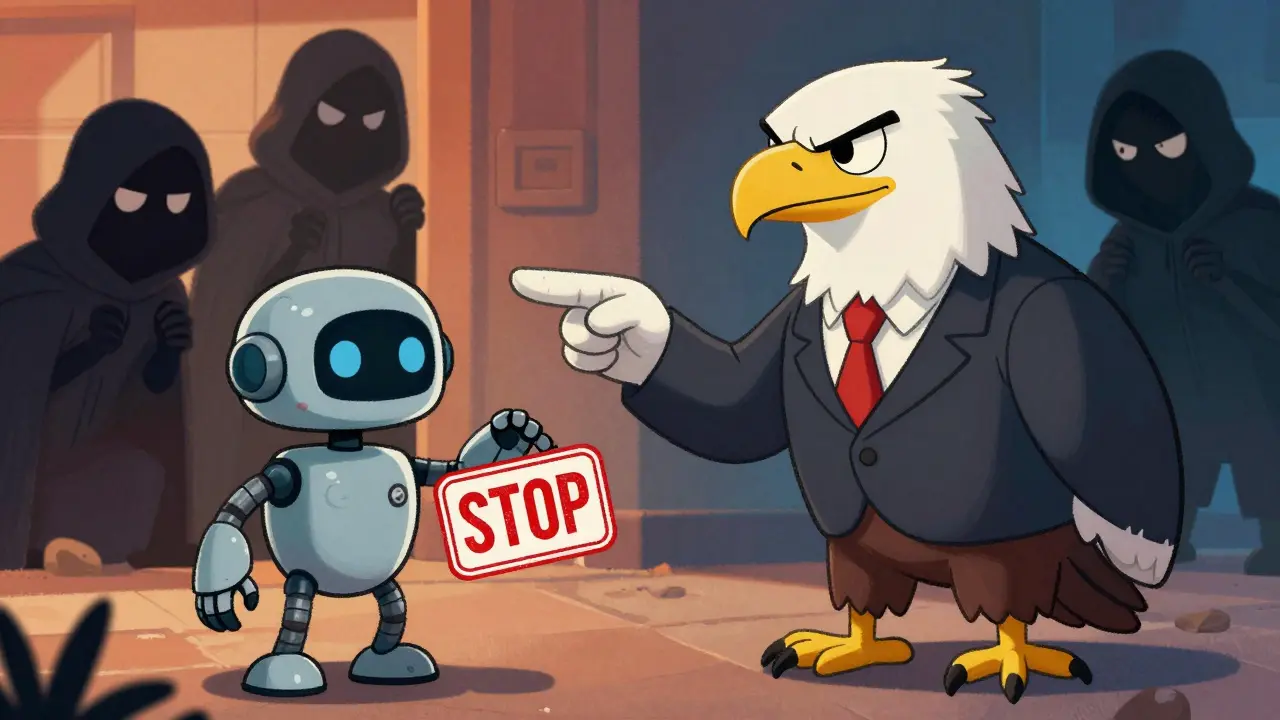
The crackdown wasn't random. It was driven by specific, high-profile crimes. The US Treasury pointed to the Lazarus Group, a state-sponsored hacking team linked to North Korea. According to officials, this group used Tornado Cash to launder more than $455 million stolen from various crypto projects.
Two major heists drew particular attention:
- The Harmony Bridge Heist (June 2022): Hackers stole millions, and a significant portion was washed through Tornado Cash.
- The Nomad Heist (August 2022): Another massive breach where at least $7.8 million was funneled through the mixer.
Brian E. Nelson, Under Secretary of the Treasury for Terrorism and Financial Intelligence, stated clearly that Tornado Cash failed to impose effective controls. The government's stance was that providing a tool specifically designed to obscure financial trails, without any anti-money laundering (AML) checks, made the creators complicit in the laundering. This set a dangerous precedent. It suggested that intent doesn't matter as much as outcome. If your tool helps criminals, you are on the hook.
The Roman Storm Trial: A Split Verdict
The human cost of these regulations came into focus during the trial of Roman Storm, a co-founder of Tornado Cash. His case went to trial in the Southern District of New York in 2025. The prosecution tried to paint him as a criminal mastermind who knowingly built a money laundering machine. The defense argued he was a developer building privacy tools for legitimate users.
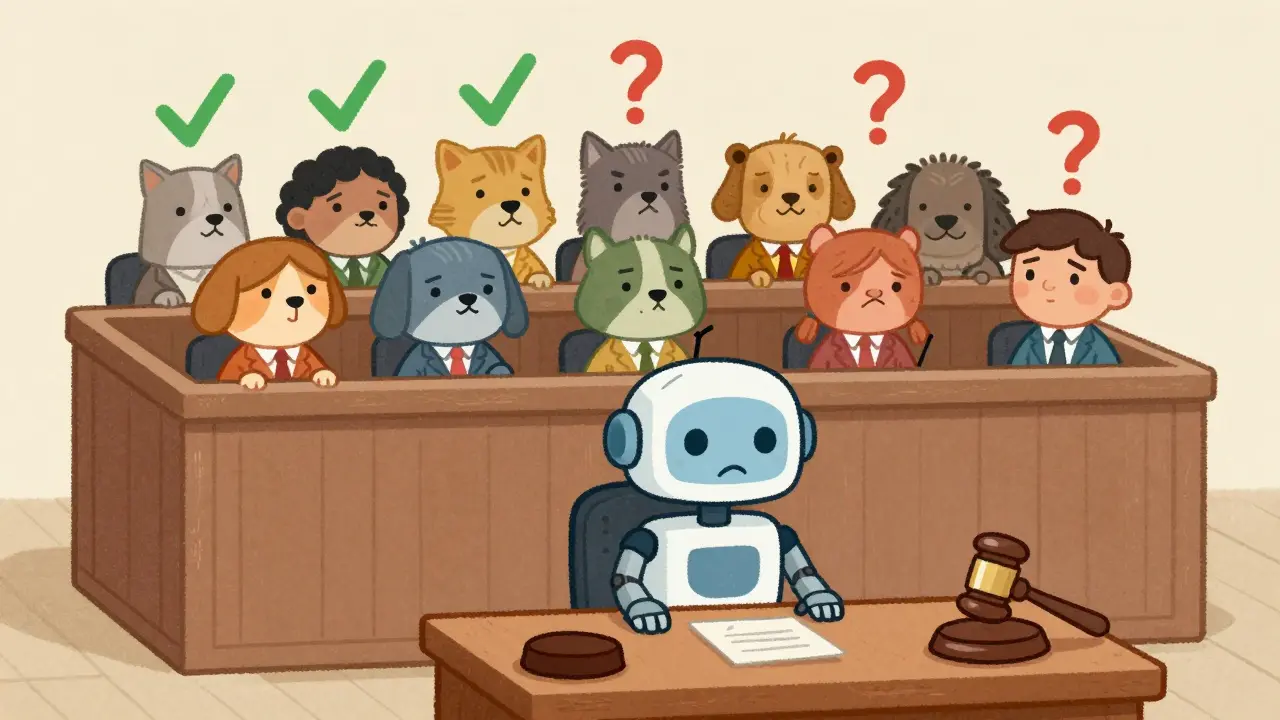
The result on August 6, 2025, was a shock to many observers. The jury delivered a split verdict:
- Guilty: Conspiracy to operate an unlicensed money transmitting business.
- Deadlocked: The jury could not agree on the more serious charges of conspiracy to commit money laundering and conspiracy to violate sanctions.
This mixed outcome is crucial. It shows that while jurors agreed Storm should have followed traditional banking licensing laws, they were unsure if he personally conspired to break sanctions or facilitate money laundering. This distinction matters. It suggests that while regulators want to control DeFi, proving criminal intent in decentralized systems is incredibly difficult. The deadlocked counts leave a cloud of uncertainty over other developers. Are they safe? Or is Storm just the first example?
Impact on Developers and DeFi
If you are a developer, the Tornado Cash case is a warning shot. Before 2022, many builders believed that code was speech and that decentralized protocols were beyond the reach of national laws. Now, that belief is shattered. The sanctions signaled that OFAC views smart contracts as financial services providers. This means you might need licenses, KYC (Know Your Customer) procedures, and transaction monitoring, even if your protocol is automated.
The fear is real. Many developers have paused work on privacy-focused projects. Others have moved their operations offshore, hoping to escape US jurisdiction. However, the global nature of the internet makes true escape difficult. If your users include Americans, or if your tokens trade on US-friendly exchanges, you are still in the crosshairs. The industry is now scrambling to build "compliance-friendly" privacy tools. These new protocols try to offer some anonymity while allowing authorities to track suspicious activity. It is a compromise that purists hate, but pragmatists accept as the price of survival.
| Aspect | Before Tornado Cash Sanctions (Pre-2022) | After Sanctions (2022-2026) |
|---|---|---|
| Legal Status of Code | Generally viewed as free speech/tool | Can be classified as a financial service provider |
| Developer Liability | Limited to direct fraud/intent | Potential liability for third-party misuse |
| Privacy Tools | Unregulated niche market | Heavily scrutinized, often blocked by exchanges |
| Compliance Requirements | Minimal for non-custodial protocols | KYC/AML expected, even for some DeFi |
User Experience and Market Reaction
For regular users, the sanctions brought immediate friction. Exchanges like Binance, Coinbase, and Kraken quickly froze accounts associated with Tornado Cash addresses. If you had ever interacted with the mixer, even years ago, you risked losing access to your funds. This created a chilling effect. People stopped using privacy tools out of fear, not just legality.
Interestingly, the crackdown didn't stop criminals. Analysis shows that exploiters simply adapted. They found other mixers or developed new techniques. The demand for privacy remains high among bad actors, regardless of sanctions. Meanwhile, legitimate users who wanted privacy for personal reasons-like hiding medical purchases or protecting business strategies-found themselves caught in the net. They couldn't easily prove their innocence to frozen exchanges.
In March 2025, reports surfaced that sanctions were being lifted or relaxed, causing the TORN token to jump from $8 to $15. However, this relief was temporary and partial. The underlying legal framework hasn't changed. The threat remains. Every time a new mixer launches, investors watch nervously, waiting for the next OFAC announcement.
What Comes Next for Crypto Privacy?
We are entering a new era of regulated privacy. The wild west days of anonymous DeFi are likely over. Future protocols will likely feature "privacy by design" that includes backdoors for regulators or strict whitelisting of users. This might sound dystopian, but it is the logical evolution of the industry trying to coexist with traditional finance.
Regulators worldwide are watching the US closely. Some countries may follow suit, while others might position themselves as havens for decentralized innovation. For now, the message is clear: if you want to build in crypto, you must assume the government considers your code a bank. And banks have rules. The Tornado Cash case taught us that immutability is not a shield against the law. It is just a feature that makes enforcement harder, not impossible.
Is it illegal to use Tornado Cash in the US?
Yes. Since the August 2022 sanctions, US persons are prohibited from interacting with Tornado Cash smart contracts. This includes sending funds to or withdrawing from the protocol. Violating this can lead to civil penalties and potential criminal charges for violating sanctions.
What happened to Roman Storm?
Roman Storm, a co-founder of Tornado Cash, was convicted in August 2025 of conspiring to operate an unlicensed money transmitting business. However, the jury deadlocked on more serious charges related to money laundering and sanctions violations, leaving his full legal status partially unresolved.
Why did OFAC sanction smart contracts?
OFAC argued that Tornado Cash functioned as a financial service provider that facilitated money laundering for sanctioned entities like the Lazarus Group. By sanctioning the contracts, they aimed to cut off US persons from accessing the illicit services provided by the protocol.
Can I still use crypto mixers safely?
Using mixers carries significant legal risks, especially in the US. While other mixers exist, they may also face sanctions. Additionally, most major exchanges will freeze your account if they detect mixer usage. Always consult with a legal expert before using privacy-enhancing tools.
Did the sanctions stop criminals from using Tornado Cash?
No. Studies indicate that criminal activity shifted to other platforms or methods rather than stopping entirely. The sanctions created compliance hurdles but did not eliminate the demand for anonymizing illicit funds.


mark valmart
June 3, 2026 AT 10:39honestly this whole situation is just wild to think about.
Crystal Davis
June 5, 2026 AT 01:12The legal precedent set here is absolutely disastrous for software development as a whole. By sanctioning the smart contracts, OFAC has effectively declared that code is not speech but rather a financial instrument subject to seizure and regulation. This ignores the fundamental nature of immutable blockchain technology. You cannot 'shut down' code that lives on thousands of nodes globally. It creates an unenforceable law where compliance is technically impossible for the average user who might have interacted with the protocol years ago without knowing the implications. The comparison to banning a printing press is apt because it targets the tool rather than the criminal act itself. This sets a dangerous path where any open-source project with potential dual-use applications could be targeted. We are seeing the erosion of digital privacy rights under the guise of national security. The lack of due process for the code itself is concerning. Developers are now walking on eggshells, fearing prosecution for creating tools that have legitimate privacy uses. This chilling effect will stifle innovation in DeFi and privacy tech for years to come. The government's argument that intent doesn't matter as much as outcome is a slippery slope. If we accept that, then every developer building encryption tools is potentially complicit in crimes committed by those using their tools. It is a fundamentally flawed legal theory applied to a new technological paradigm. The split verdict in Storm's trial shows even jurors struggled with this concept. They couldn't agree on whether he conspired to break sanctions, which highlights the ambiguity. Yet the conviction on unlicensed money transmitting business stands, treating a decentralized protocol like a traditional bank. This misclassification ignores the non-custodial nature of the service. No one held the keys. No one controlled the funds. It was pure math. Treating math as a bank is absurd. But here we are, in 2026, dealing with the fallout. Exchanges are over-complying, freezing accounts based on mere suspicion. Innocent users are losing access to their own assets. This is regulatory capture at its finest. The industry is now forced to build backdoors or whitelists, defeating the purpose of decentralization. Privacy is dead in the US crypto space. Long live surveillance capitalism.
Barclay Chantel
June 6, 2026 AT 13:19I suppose one could argue that the sanctity of code is paramount, but let us not pretend that Tornado Cash was anything other than a laundering machine from day one. The developers knew exactly what they were building and who would use it. To play the victim card now, after billions in illicit flows, is frankly disingenuous. The Roman Storm verdict was a mercy, really. He got off lightly considering the scale of the harm done to the ecosystem's reputation. The idea that 'code is speech' is a tired libertarian trope that falls apart when you look at the real-world consequences. Speech doesn't launder North Korean hack funds. Tools do. And if your tool is designed specifically to evade AML/KYC checks, you are part of the problem. The US government was right to act. The question is never 'should we regulate crime?' but 'how do we enforce it?' Sanctioning the contract address was the only lever available. Yes, it's clumsy. Yes, it affects innocent users who dabbled in it. But that is the price of participating in a shadow economy. If you want privacy, go offshore. Don't expect American courts to protect your anonymity while you facilitate global crime. The shift towards 'compliance-friendly' privacy is not dystopian; it is mature. It means the industry is growing up. We need rails that work with traditional finance, not against it. The wild west days were fun for speculators, but terrible for legitimacy. I welcome the end of that era. Let the criminals find new ways; they always do. But don't blame the regulators for trying to keep the lights on in the broader financial system.
kamal ifrani
June 6, 2026 AT 22:58You people are so naive. The government isn't protecting you, they're controlling you. Tornado Cash was freedom. Now you have to beg banks to let you move your own money. Storm is a hero for standing up to them. The split verdict proves the jury had a conscience. The rest of you sheep just accept whatever narrative they feed you. Wake up.
Debbie Lewis
June 8, 2026 AT 18:36I just feel bad for all the regular folks who got caught in the crossfire. It's scary how easy it is to lose access to your savings because of a technicality. We need better education on this stuff so people know what they're clicking on. It's not just about criminals, it's about everyday privacy too.
Joe Clements
June 9, 2026 AT 18:18I totally hear you Debbie. It's really unsettling to think that your past actions could haunt you like that. I hope the industry finds a way to balance security with fairness for honest users. It feels like everyone is getting punished until they prove they're guilty, which is backwards.
Rosie Morris
June 9, 2026 AT 20:05its so sad tho. ppl just wanted some privacy and now theyre scared to even touch crypto. the govts are watching everything ugh.
lorna erni
June 11, 2026 AT 04:59Stop crying about it! If you didn't want to be tracked, why did you use a public ledger? Tornado Cash was a band-aid on a bullet hole. The real issue is that crypto promised anonymity and delivered transparency. Now the regulators are just cleaning up the mess. Storm got lucky, but next time won't be so kind. Get used to KYC. It's the future. Embrace it or get left behind. The 'privacy' you loved was just a loophole, and loopholes get closed. That's how laws work. Stop acting like victims when you chose to play in the gray area. The Lazarus Group stole millions! Do you care about that or just your right to hide? Priorities, people!
stalin brian
June 11, 2026 AT 12:33i think lorna has a point abt the lazarus group but the method was harsh. maybe there was a better way? i wonder if other countries will follow suit or if theyll see it as a mistake. its a complex issue for sure.
saradee dee
June 12, 2026 AT 23:05Oh my goodness, this is such a dramatic turn of events! I can't believe they actually sanctioned code! It feels like something out of a sci-fi movie, but here we are. The poor developers must be so stressed out. I hope they find a peaceful solution soon. It's very sad that trust is broken. We should all try to understand each other better instead of fighting. Maybe the exchanges can be more flexible? It seems like everyone is just angry and scared. I wish things were simpler again.
Craig Swanson
June 13, 2026 AT 02:24Listen up, folks. The reality is harsh but necessary. You can't have a financial system that facilitates crime and expect no consequences. Storm's case is a textbook example of accountability. Yes, the jury deadlocked on some charges, but he was still convicted of operating an unlicensed business. That's the bottom line. If you're building financial infrastructure, you follow the rules. No excuses. The 'decentralized' label is not a shield against the law. It's time for the industry to step up and implement proper controls. If you can't handle compliance, stay out of finance. This isn't about stifling innovation; it's about ensuring stability and legality. Those who refuse to adapt will be swept aside. It's that simple. Stop whining and start complying. The world is moving forward, and you need to move with it or get left in the dust. This is a lesson learned the hard way, but learn it nonetheless.
Bill Gunn
June 14, 2026 AT 04:02Hey everyone! 👋 Just wanted to chime in with a bit of expert insight here. 🧠 While the legal drama is intense, the tech side is fascinating. Zero-knowledge proofs are incredible, but applying them to financial compliance is tricky. 🔐 The shift to 'privacy by design' with backdoors is a compromise, yes, but it's also pragmatic. 🛠️ Think of it like a safe deposit box: you want privacy, but the bank needs to know who owns it. 💼 For devs, this means learning to integrate AML checks directly into smart contracts. It's not ideal for purists, but it keeps the lights on. 💡 Also, don't forget that other mixers are popping up, so the cat-and-mouse game continues. 🐱🐭 Stay curious and keep learning! 🚀
Dana Rapoport
June 16, 2026 AT 01:23This situation forces us to confront deep philosophical questions about the nature of property and privacy in the digital age. Is code truly speech, or is it action? The Tornado Cash case blurs these lines significantly. As we navigate this new regulatory landscape, we must consider what kind of society we want to build. One that values absolute transparency or one that protects individual autonomy? There is no easy answer. The split verdict suggests even our peers are divided. We must engage in thoughtful dialogue rather than polarization. The future of DeFi depends on finding a middle ground that respects both security and liberty. It is a delicate balance, but one worth striving for.
Hadleigh Edwards
June 16, 2026 AT 11:43Well, I mean, looking at the big picture, despite all the negative headlines and the initial shockwaves that rippled through the entire cryptocurrency community when OFAC made that unprecedented move back in 2022, one has to consider that perhaps this rigorous scrutiny is actually paving the way for a much more robust and trustworthy financial infrastructure in the long run, because if we think about it, the early days of crypto were fraught with scams and exploits that eroded public trust, and while the loss of privacy tools is certainly a setback for those who value anonymity above all else, the establishment of clear legal boundaries, however imperfectly drawn they may seem at first glance, provides a framework within which legitimate businesses can operate without the constant fear of arbitrary enforcement, and although the Roman Storm trial was undeniably messy and the split verdict leaves many lingering questions about the extent of developer liability, it also demonstrates that the judicial system is attempting to grapple with these novel concepts rather than simply sweeping them under the rug, which is a positive sign in itself, suggesting that there is room for nuance and debate in how we define financial services in a decentralized context, and furthermore, the adaptation of the industry towards compliance-friendly solutions indicates a maturation of the sector, moving away from the reckless abandon of the early adopter phase towards a more sustainable model that can coexist with traditional banking systems, thereby potentially opening the door for wider adoption by institutional investors who require such safeguards, so while the immediate impact was undoubtedly painful for many users and developers alike, the long-term trajectory might well lead to a healthier, more integrated ecosystem that benefits everyone involved, provided we remain optimistic and continue to advocate for fair and reasonable regulations that protect consumers without stifling innovation.
Christina Pearce
June 17, 2026 AT 01:41I appreciate the detailed breakdown here. It's important to remember that while the sanctions were broad, the legal nuances matter. The distinction between the guilty verdict on unlicensed money transmission and the deadlock on money laundering conspiracy is key. It shows that proving criminal intent in a decentralized environment is hard. I think we need more dialogue between regulators and developers to clarify these boundaries. Blunt force trauma isn't the best approach for tech regulation. Let's keep discussing how to improve this.