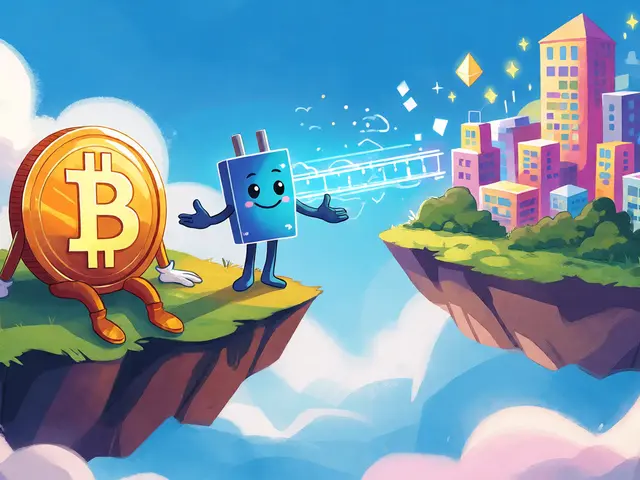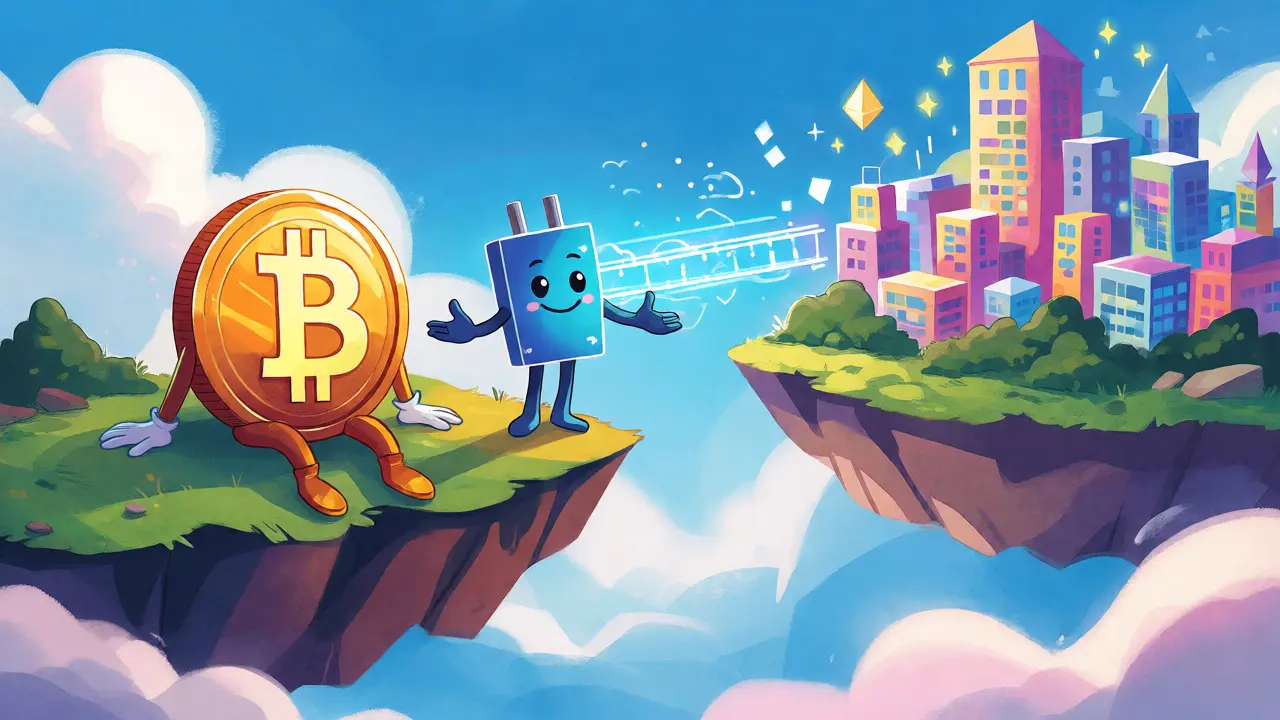
Imagine holding Bitcoin but wanting to earn interest on Ethereum. For years, this was like trying to plug a UK power cord into a US wall socket-physically impossible without an adapter. Wrapped tokens are that adapter. They are tokenized versions of cryptocurrencies from one blockchain, minted on another, allowing assets to move freely between isolated networks. This mechanism is the backbone of modern cross-chain trading, turning static holdings into liquid, usable capital across different ecosystems.
The Core Problem: Isolated Blockchains
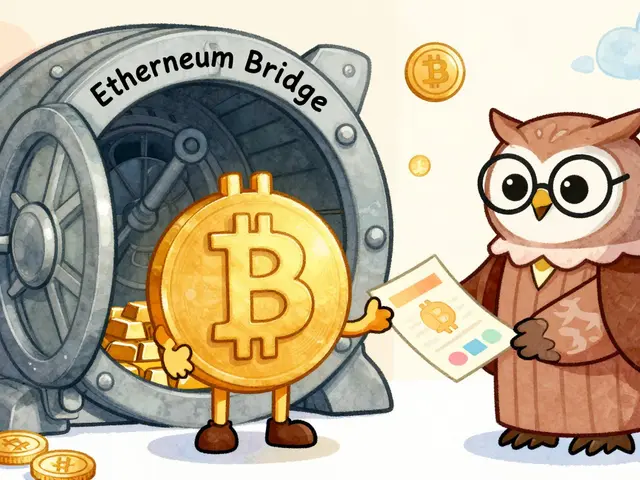
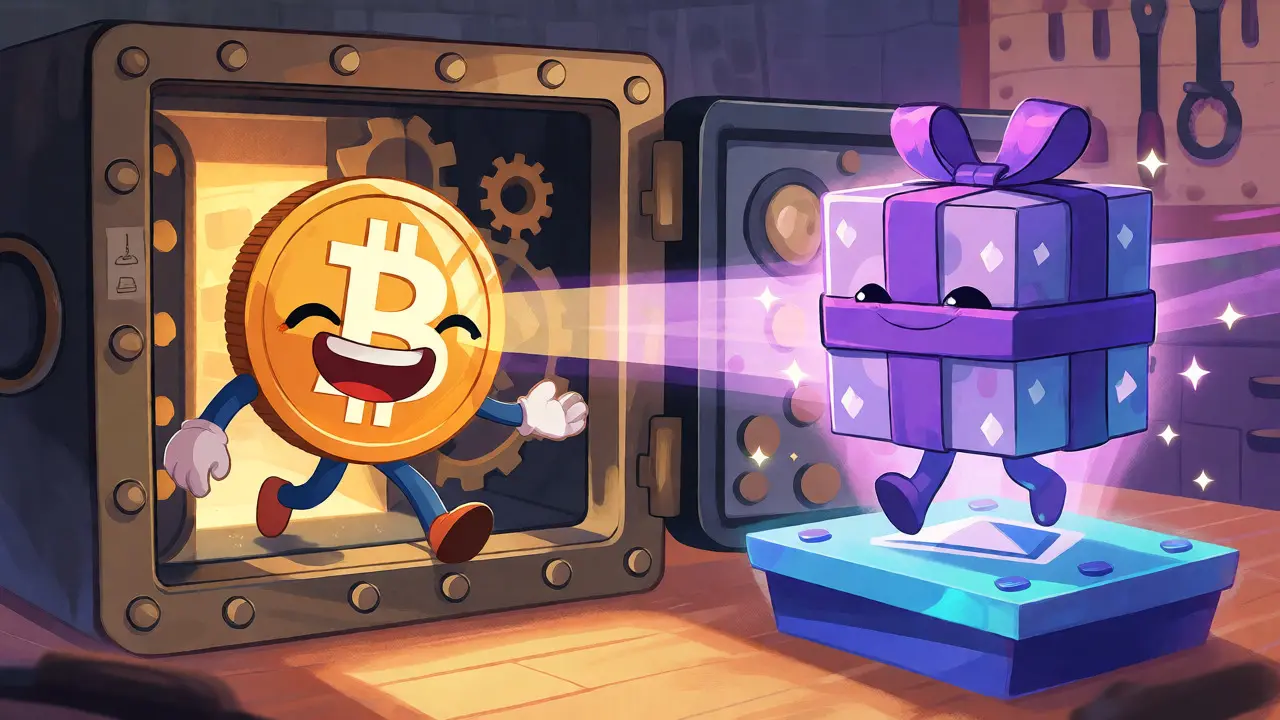
Blockchains don’t talk to each other by default. Bitcoin is great at storing value, but it can’t execute smart contracts. Ethereum is brilliant for decentralized finance (DeFi), but it doesn’t natively support Bitcoin’s security model. Before wrapped tokens emerged around 2019, if you held BTC, your money was stuck in the Bitcoin network. You couldn’t use it on Uniswap or lend it on Aave. The solution? Create a digital IOU. When you lock your real Bitcoin in a vault, someone mints a "Wrapped Bitcoin" (WBTC) token on Ethereum. It represents your BTC, trades exactly like it, and can be used in any Ethereum app. When you want your real BTC back, you burn the WBTC, and the vault releases your coins.
How the Wrapping Mechanism Works
The process isn't magic; it's a precise sequence of locking and minting. Here is what happens when you wrap an asset:
- Deposit: You send your native asset (e.g., ETH or BTC) to a custodian or smart contract on its home chain.
- Mint: Once the deposit is confirmed, a corresponding amount of wrapped tokens is created on the target chain. For example, sending 1 ETH to a bridge might mint 1 wETH on Binance Smart Chain.
- Trade: You now hold a standard ERC-20 token (if on Ethereum) that behaves just like the original asset but lives on a new network.
- Redeem: To get your original asset back, you send the wrapped tokens to the burn address. The protocol verifies the burn and unlocks your native coins.
This system relies on strict 1:1 backing. If there are 10,000 WBTC tokens circulating, there must be 10,000 actual Bitcoins sitting in custody. Auditors like Armanino LLP verify these reserves monthly for major projects like WBTC, ensuring the peg holds firm.
Custodial vs. Decentralized Bridges
Not all wrapped tokens are created equal. The biggest risk in this space is trust. Who holds the keys to the vault? There are two main approaches, each with distinct trade-offs.
| Feature | Custodial (e.g., WBTC) | Decentralized (e.g., renBTC) |
|---|---|---|
| Control | Centralized entity (BitGo) holds assets | Smart contracts and nodes manage assets |
| Risk | Custodian could freeze funds or fail | Code exploits or node failures |
| Liquidity | High institutional adoption | Often lower liquidity, higher slippage |
| Speed | Fast, often instant via merchants | Slower due to multi-signature requirements |
Custodial models, like WBTC, dominate the market because they offer deep liquidity and easy integration. However, they introduce counterparty risk. If BitGo were to have regulatory issues, WBTC holders might face delays. Decentralized alternatives aim to remove this middleman, using code instead of humans, but they often suffer from slower redemption times and complex user experiences.
Why Traders Love Wrapped Assets
The primary driver for wrapped tokens is utility. By wrapping assets, traders unlock access to yield opportunities that simply didn't exist before. In 2023, over $45 billion was locked in Ethereum DeFi. Much of that capital came from wrapped assets. Without WBTC, Bitcoin holders would have missed out on lending rates averaging 6% APY on platforms like Aave. Similarly, wrapped stablecoins allow users to arbitrage price differences between chains. If USDC is cheaper on Polygon than on Ethereum, traders can swap and profit, keeping prices aligned across networks.
It also solves a UX problem. Instead of managing five different wallets for five different blockchains, you can keep most of your portfolio in one place, represented by wrapped tokens. It simplifies the interface, even if the underlying infrastructure remains complex.

The Risks: Hacks and Peg Deviations
It’s not all smooth sailing. Cross-chain bridges are the most hacked part of crypto. In 2022 alone, bridges lost over $2 billion to exploits. The Ronin Bridge hack and the Wormhole exploit showed that if the smart contract logic fails, the peg breaks, and people lose money. Another issue is peg instability. During market volatility, wrapped tokens can drift from their true value. In March 2023, during the banking crisis, WBTC briefly traded at a discount because users panicked about whether the collateral was actually there. Always check the current exchange rate before swapping large amounts.
The Future: Beyond Simple Wrapping
We are moving toward more sophisticated solutions. Newer protocols like Chainlink’s CCIP use a "burn and mint" approach rather than just locking assets. This eliminates the need for massive locked reserves, reducing attack surfaces. Ethereum is also working on standards like EIP-3664 to make token wrapping seamless and standardized. While some purists argue wrapped tokens are a temporary hack, they remain essential until native interoperability becomes mainstream. For now, they are the bridge that keeps the multi-chain world connected.
What is the difference between wrapped and native tokens?
Native tokens exist on their original blockchain (like BTC on Bitcoin). Wrapped tokens are representations of those assets on a different blockchain (like WBTC on Ethereum). They maintain a 1:1 price ratio but operate under the technical rules of the host chain, such as ERC-20 standards on Ethereum.
Are wrapped tokens safe to hold?
Safety depends on the issuer. Custodial wrappers like WBTC rely on regulated entities holding reserves, which introduces counterparty risk. Decentralized wrappers rely on smart contracts, which introduces code vulnerability risk. Always check recent audits and reserve proofs before holding significant amounts.
How do I redeem my wrapped tokens for the original asset?
You typically send your wrapped tokens to a specific bridge address or burn them via the provider's interface. The protocol then confirms the transaction and releases the equivalent amount of the native asset to your wallet on the original blockchain. Redemption times vary from minutes to hours depending on network congestion.
Why do wrapped tokens sometimes trade at a different price?
This is called "de-pegging." It happens when demand for the wrapped token exceeds supply, or when investors doubt the backing reserves. Arbitrage bots usually correct small deviations quickly, but severe market stress can cause wider gaps until confidence returns.
Can I use wrapped tokens for gas fees?
Generally, no. Most blockchains require their native coin for gas fees (e.g., ETH for Ethereum, BNB for Binance Smart Chain). You usually need to swap a portion of your wrapped tokens back to the native asset to pay for transactions on that specific network.