Imagine losing your life savings in a split second, only to find out the money didn't vanish into thin air-it was stolen by a state-sponsored hacking group. This isn't a hypothetical nightmare; it is the reality for thousands of cryptocurrency users today. North Korea has turned digital theft into its primary revenue stream, stealing billions to fund nuclear weapons programs while evading international sanctions. If you are holding crypto, trading on exchanges, or working in finance, understanding North Korean crypto sanctions and how to identify sanctioned wallet addresses is no longer optional. It is essential for protecting your assets and staying compliant with global laws.
The Scale of the Threat: Record-Breaking Theft in 2025
The numbers are staggering. According to analysis from blockchain intelligence firm Elliptic published in October 2025, North Korean hacking groups stole over $2.03 billion in cryptocurrency during that year alone. That figure represents the largest annual total ever recorded, even with three months left in the calendar year. To put this in perspective, 2025's haul is nearly triple the $712 million stolen in 2024 and almost double the previous record set in 2022, when attacks on the Ronin Network and Harmony Bridge netted $1.35 billion.
This surge brings the cumulative known value of cryptoassets stolen by the regime to more than $6 billion since tracking began. The United Nations and multiple government agencies have confirmed that these funds do not disappear-they directly finance North Korea’s prohibited nuclear weapons and missile development programs. The University of Hawai'i at West O'ahu's Cyber Program noted in their Global Weekly Executive Summary that these activities have caused "significant monetary and reputational damage" across the entire cryptocurrency industry. When an exchange like Bybit suffered a $1.46 billion breach in February 2025, it wasn't just a technical failure; it was a targeted geopolitical attack.
Who Is Behind the Hacks? Identifying the Actors
North Korea does not operate as a lone wolf. The Multilateral Sanctions Monitoring Team (MSMT), an initiative involving 11 participating nations including the U.S., Japan, and South Korea, released its second comprehensive report in October 2025. This report documents a "full-spectrum" cyber program that now rivals the sophistication of China and Russia's operations. The MSMT specifically focused on the Democratic People's Republic of Korea's cyber and information technology (IT) worker activities between January 2024 and September 2025.
The U.S. Department of the Treasury's Office of Foreign Assets Control (OFAC) has been aggressive in naming names. On July 24, 2025, OFAC sanctioned several entities and individuals, including Vitaliy Sergeyevich Andreyev, Kim Ung Sun, Shenyang Geumpungri Network Technology Co., Ltd, and Korea Sinjin Trading Corporation. These actors were involved in fraudulent IT worker schemes where they ostensibly worked for foreign companies but instead stole data and demanded ransom. Under Secretary of the Treasury John K. Hurley stated clearly that the North Korean regime targets American businesses through these fraud schemes, emphasizing the U.S. commitment to holding the guilty accountable.
What is the Multilateral Sanctions Monitoring Team (MSMT)?
The MSMT is an international body established to ensure the effectiveness of UN Security Council Resolutions regarding North Korea. It monitors and reports on sanctions violations, replacing the previously disbanded UN Panel of Experts. Its reports provide critical evidence used by governments to sanction specific wallets and entities.
How to Identify Sanctioned Wallet Addresses
You might wonder, "How can I tell if a wallet address is sanctioned?" You cannot simply look at a string of characters and know its origin. Identification requires advanced blockchain analytics. Firms like Elliptic use transaction pattern recognition, cluster analysis, and intelligence sources to attribute cyber thefts to North Korea. They track how stolen funds move through mixing services, cross-chain swaps, and privacy coins before being converted to fiat currency.
However, specific wallet addresses are rarely published in public lists due to operational security concerns. Instead, financial institutions and exchanges rely on real-time screening tools. These tools compare every transaction against vast databases of known DPRK-associated clusters. If you are running a business or managing significant assets, you must implement similar monitoring. The learning curve steepened significantly in 2025 as North Korean actors adopted more sophisticated laundering techniques. Simple static lists are no longer effective; dynamic, AI-driven screening is the new standard.
The Laundering Process: From Theft to Fiat
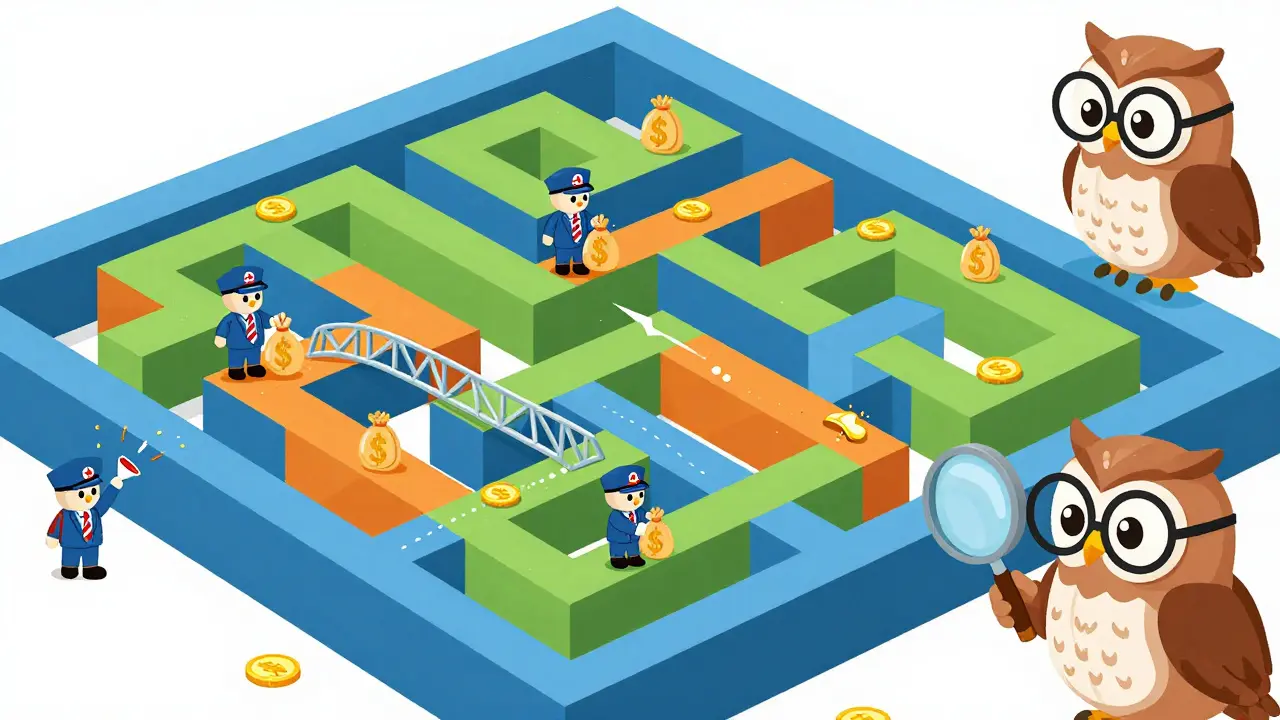
Understanding how the money moves helps you understand why detection is difficult. After a successful hack-such as those targeting LND.fi, WOO X, and Seedify platforms-the stolen crypto is immediately moved. North Korean hackers employ complex laundering techniques designed to break the link between the theft and the final destination. This often involves:
- Mixing Services: Using tumblers to obscure the source of funds.
- Cross-Chain Swaps: Moving assets between different blockchains (e.g., from Ethereum to Bitcoin) to complicate tracing.
- Privacy Coins: Converting transparent assets into Monero or Zcash, which offer enhanced anonymity.
- DeFi Protocols: Utilizing decentralized finance platforms to swap tokens without traditional identity checks.
Despite these efforts, blockchain is immutable. Every transaction leaves a trace. Elliptic acknowledges that while attribution challenges remain, their models can identify hallmarks of North Korea-linked activity. The actual figure of stolen crypto may be even higher than reported because many thefts share these hallmarks but lack sufficient evidence for definitive attribution. Other thefts likely remain unreported entirely.
International Response and Sanctions Enforcement
The global community is responding with unprecedented coordination. The U.S., Japan, and South Korea issued a joint statement in July 2025 addressing the threats posed by DPRK IT workers. The U.S. Treasury Department announced a "whole-of-government effort" to counter these revenue generation schemes. This includes expanding designations to target networks like Chinyong Information Technology Cooperation Company, specifically focusing on their use of cryptocurrency for sanctions evasion.
The stakes are incredibly high. The U.S. Department of State offers rewards of up to $15 million for information leading to the disruption of these operations. This signalizes the critical importance placed on ending this funding stream. For regular users, this means stricter Know Your Customer (KYC) procedures on exchanges and potentially frozen accounts if interactions with sanctioned addresses are detected. Ignorance is not a defense; compliance is mandatory.
| Entity | Type | Role/Action | Date of Significance |
|---|---|---|---|
| Elliptic | Blockchain Analytics Firm | Tracks and attributes crypto thefts to DPRK actors | October 2025 |
| MSMT | International Monitoring Body | Reports on UN sanctions violations and cyber activities | October 2025 |
| OFAC | U.S. Government Agency | Imposes sanctions on individuals and entities | July 2025 |
| Bybit | Cryptocurrency Exchange | Target of $1.46 billion breach attributed to DPRK | February 2025 |

Protecting Yourself: Practical Steps for Users and Businesses
If you are an individual trader, your first line of defense is using reputable, regulated exchanges that already screen for sanctioned addresses. Do not engage in peer-to-peer trades with unknown parties offering below-market rates; this is a common vector for laundering stolen crypto. If you are a business owner or developer building DeFi protocols, you must integrate blockchain analytics APIs. Assume that North Korean actors will target your platform. Their adaptability suggests these attacks will remain a persistent threat through at least 2026.
Be wary of "too good to be true" investment opportunities or unsolicited IT job offers from overseas firms, which can be fronts for data theft and ransom demands. The MSMT report highlights that foreign currency earnings generated by IT workers and information theft are key components of North Korea's strategy. Stay informed, verify your counterparties, and prioritize security over convenience.
Future Outlook: What to Expect in 2026
Looking ahead, cybersecurity firms predict North Korea will increasingly target decentralized finance (DeFi) protocols and cross-chain bridges. The success of the Bybit breach demonstrated the vulnerability of centralized points of failure, but DeFi offers new avenues for exploitation due to its permissionless nature. As blockchain analytics capabilities improve and international cooperation strengthens, the long-term viability of North Korea's crypto theft operations faces growing challenges. However, the regime's demonstrated adaptability means they will continue to evolve their tactics.
The cat-and-mouse game continues. Exchanges are implementing real-time screening, but hackers are developing new laundering methods. For the average user, this means a landscape of increasing regulation and scrutiny. Embrace these changes as necessary safeguards. Your participation in the crypto ecosystem depends on maintaining trust and security. By understanding the mechanics of North Korean crypto sanctions and the risks associated with sanctioned wallet addresses, you contribute to a safer, more resilient digital economy.
Can I check if my wallet address is sanctioned?
Yes, you can use blockchain analytics tools provided by firms like Elliptic or Chainalysis. Many regulated exchanges also provide compliance dashboards. If your wallet interacts with a sanctioned address, it may be flagged by authorities.
What happens if I accidentally transact with a sanctioned North Korean wallet?
You should immediately cease further transactions and consult with legal counsel specializing in financial compliance. Reporting the incident to relevant authorities may mitigate penalties. Ignoring it can lead to asset freezes and legal consequences.
Why are North Korean hackers targeting crypto instead of traditional banking?
Traditional banking systems are heavily regulated and monitored, making large-scale theft difficult. Cryptocurrency offers pseudonymity and borderless transfers, allowing North Korea to bypass international sanctions and generate revenue for its weapons programs.
Is it safe to use DeFi platforms given these threats?
DeFi platforms carry higher risks due to less regulatory oversight. However, many projects are integrating security audits and blockchain analytics to detect suspicious activity. Always research the security measures of any DeFi protocol before depositing funds.
How much has North Korea stolen in total?
As of late 2025, the cumulative known value of cryptoassets stolen by North Korea exceeds $6 billion. In 2025 alone, they stole over $2.03 billion, marking a record high.